
Roofing Materials
Roofing Materials
Tensile Fabrics and Roofing Sheets We Supply
ShadeCo India supplies roofing materials for tensile structures, shade structures and covered outdoor areas across India. Our range includes PVC-coated polyester, PTFE-coated fiberglass, ETFE foil, PVC-coated mesh, HDPE shade net, metal roofing sheets and polycarbonate sheets.
The right roofing material depends on how the space will be used, how much daylight you want below the roof, the local weather and your budget. Our in-house team helps you compare the options, then designs, fabricates and installs the complete structure.
- Fabric and sheet options for sun, rain or daylight cover
- PVC and PVDF fabrics with UV blocking up to 98%
- Steel frames designed for wind loads as per IS 875 (Part 3)
- Design, supply and installation across India
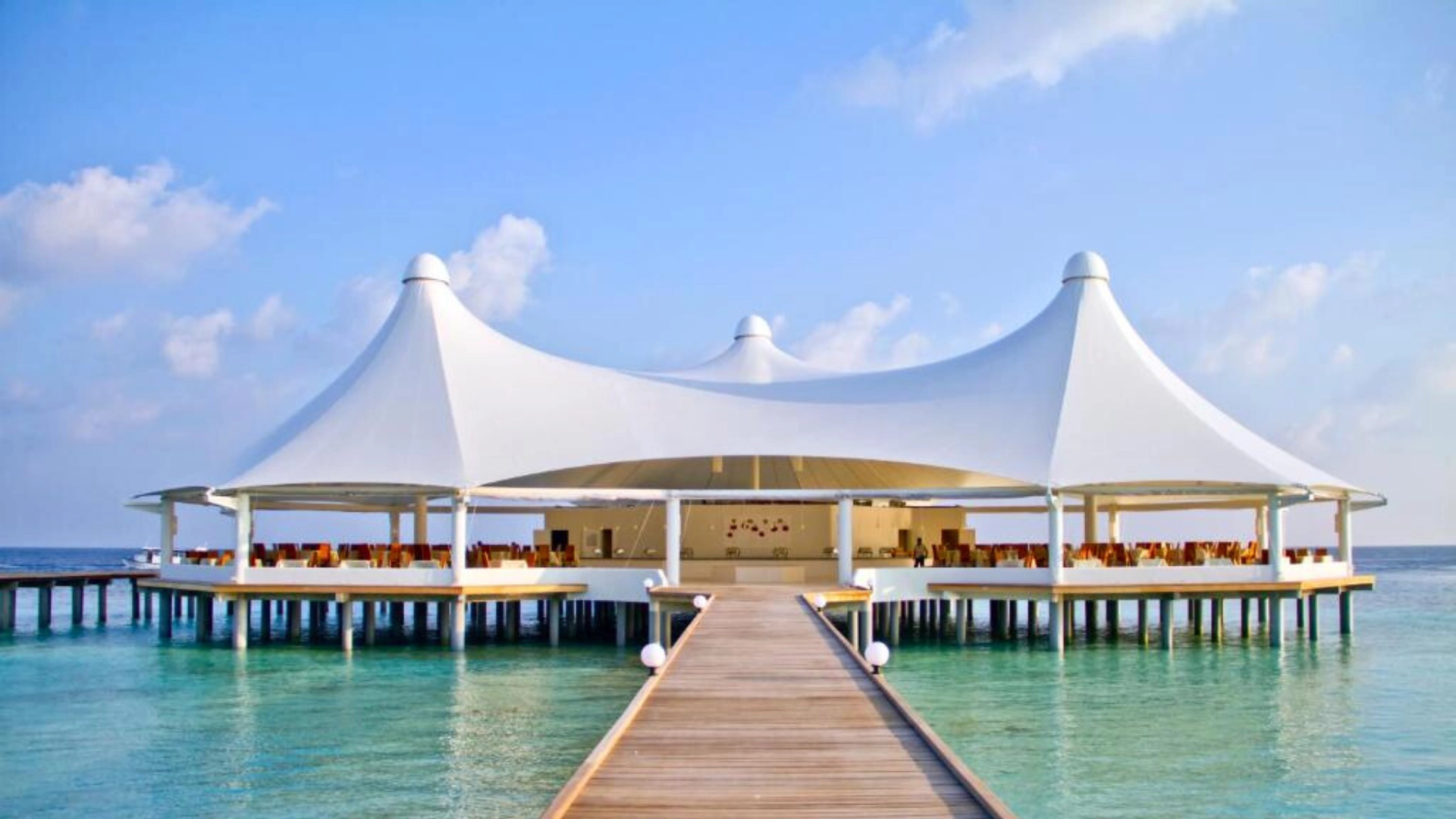
Membrane Roofing: PVC Coated Polyester, PTFE, ETFE Foil, PVC Mesh Fabric
Membrane roofing uses a tightly stretched fabric or foil in place of a solid roof. ShadeCo India works with four main membrane materials: PVC-coated polyester, PTFE-coated fiberglass, ETFE foil and PVC-coated mesh. Where only sun cover is needed, we also supply HDPE shade net. Each material differs in light, life, weight and cost, so the choice starts with what happens under the roof.
We source tensile fabrics from established makers such as Sattler Pro-Tex, Serge Ferrari, Sioen, Mehler Texnologies and SRF. These fabrics are made specially for tensile structures and are available in many colours and base weights.
A tensile roof uses less steel and fewer building materials than a conventional roof of the same size. Light-coloured membranes reflect much of the sun’s heat and let soft daylight through, which can reduce the need for lights and cooling in the covered area.
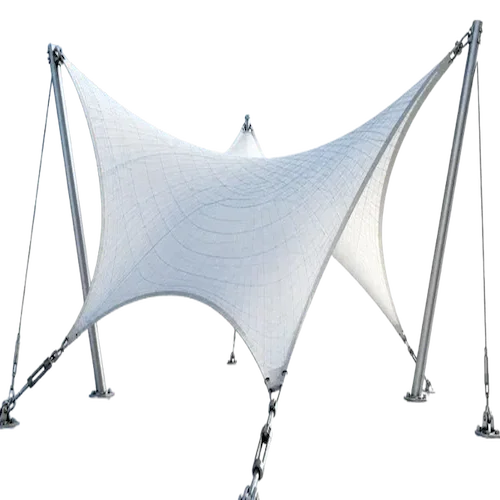
During installation, each membrane panel is pulled tight in both directions with purlins, cables, masts and tensioning fittings. Correct tension keeps the surface smooth, helps rain run off and stops the fabric from flapping in wind. The sections below explain each material in simple terms.
FABRIC | PVC
PVC-Coated Polyester: Affordable, Durable, And Versatile
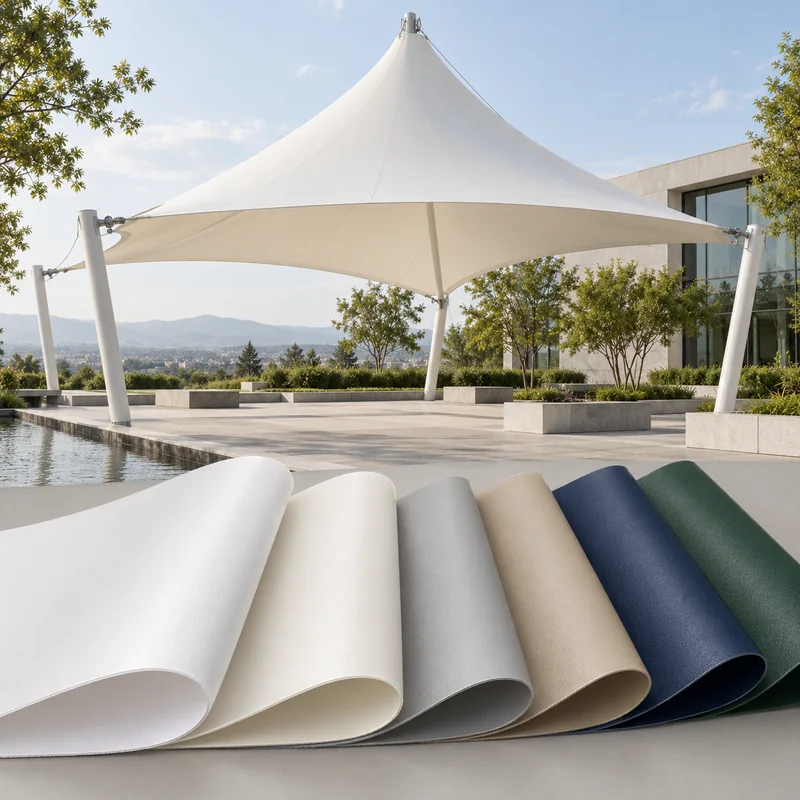
PVC-coated polyester is the most widely used fabric for tensile structures in India. It is a woven polyester base coated with PVC on both sides, and we supply it in 650, 750, 850, 900, 950, 1050 and 1350 GSM. The right weight is chosen based on the span of the structure. It is waterproof, flexible and lower in cost than PTFE, which makes it a practical choice for most shade and roofing projects.
For longer life, we recommend PVC fabric with a PVDF top coat. This layer gives better UV resistance and lets rain wash away most dust. PVDF fabric carries a warranty of up to 10 years, and UV blocking goes up to 98%, depending on the fabric grade.
The coating includes anti-fungal and anti-wicking treatment, and a flame-retardant (FR) grade is available on request. The fabric performs between −30°C and +70°C and comes in many colours. Because PVC fabric can be folded, it also suits retractable and temporary covers.
Typical uses include car parking shades, walkway canopies, entrance porches, play areas, sports courts, event spaces, hotels and restaurants.
Fabrics | PTFE
PTFE (Polytetrafluoroethylene): Durable, Weather-Resistant, And Low Maintenance
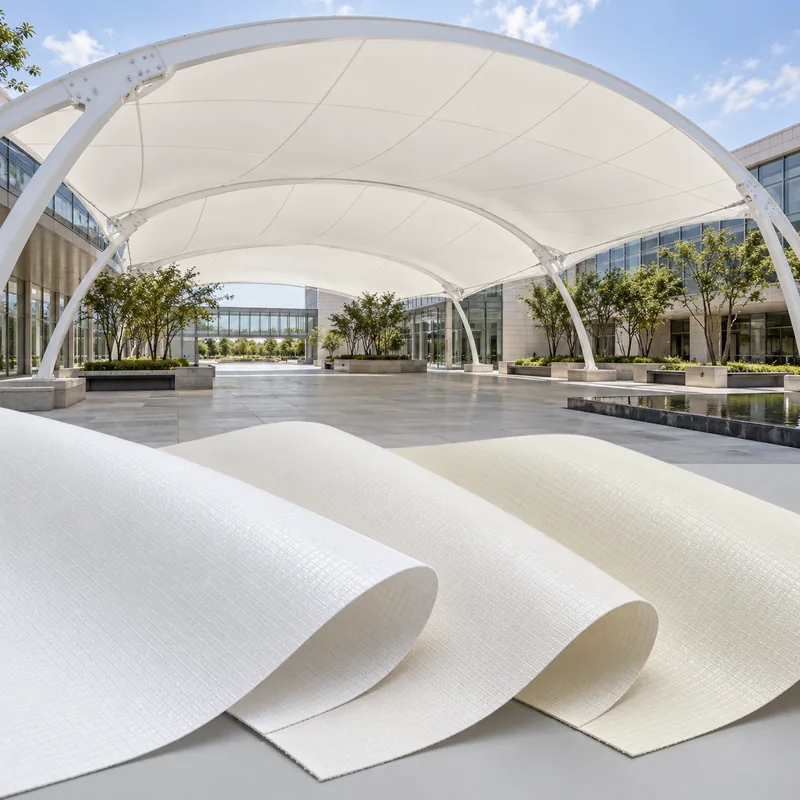
PTFE-coated fiberglass is a woven glass-fibre fabric coated with PTFE, the material widely known as Teflon®. It is the most durable tensile membrane and is chosen for permanent roofs that must last for decades. Its service life is often quoted at more than 30 years.
PTFE does not react with chemicals and resists moisture and mould. Its smooth, slippery surface lets rain carry away most dirt. The fabric is off-white or beige when installed and turns bright white within a few months as sunlight bleaches it.
By day, PTFE lets soft, even daylight into the space. At night, lights placed below make the roof glow. PTFE has better fire performance than PVC, but it costs more and cannot be folded, so it is used mainly for large, fixed roofs.
Common uses include stadiums, airport and railway station roofs, exhibition halls, auditoriums, courtyards, and large hotel or retail canopies.
Fabric | ETFE Foil
ETFE Foil: Clear, Lightweight Roofing
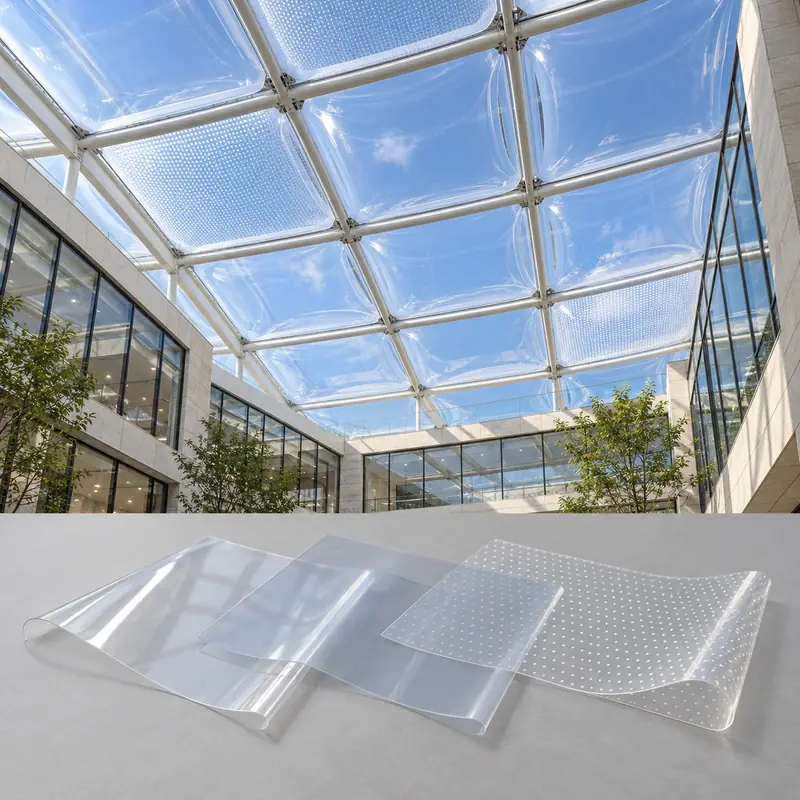
ETFE (ethylene tetrafluoroethylene) is a clear, lightweight plastic foil used in place of glass for skylights, atrium roofs, facades and long-span roofs. A single layer lets about 85% of visible light through, and because ETFE is much lighter than glass, the supporting frame can be slimmer.
ETFE is used in two ways. A single layer can be stretched over a steel or aluminium frame, often with cables for support. In a cushion system, two or more layers are fixed in aluminium profiles and kept inflated with low-pressure air, which adds insulation and helps the roof resist wind.
The main ETFE benefits are high light transmission, solar control with tinted or printed (fritted) layers, and elasticity that lets the foil stretch without tearing. It has a long life and is not damaged by sunlight, and an extra inner layer can be added for better acoustics during rain. ETFE also supports sustainability and energy efficiency by reducing daytime lighting needs, offers cost effectiveness through a lighter structure, and is recyclable at the end of its life.
Fabric | PVC Mesh
PVC-Coated Mesh Fabric: Shade with Airflow
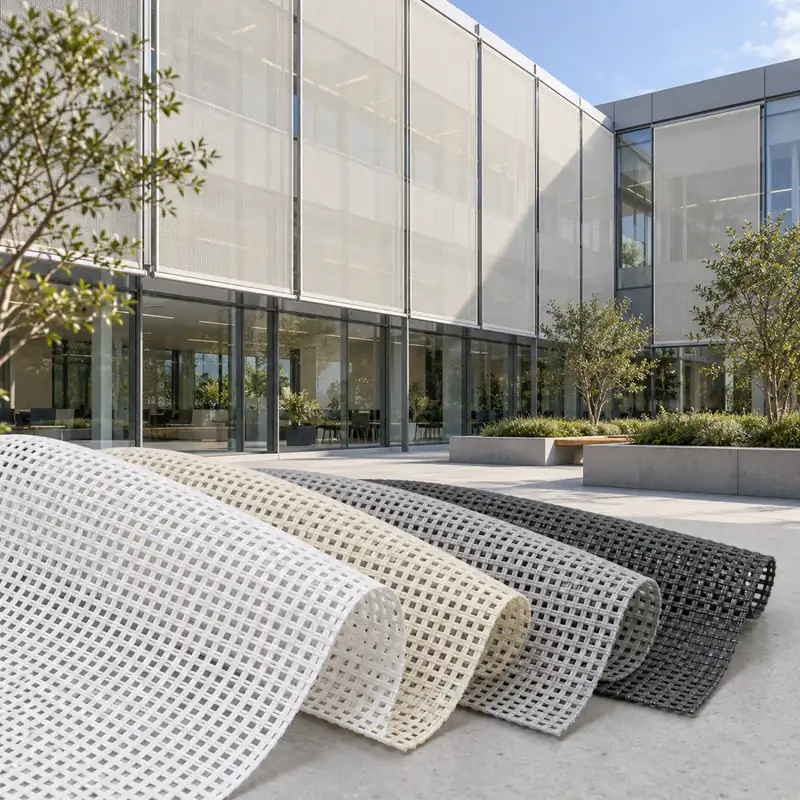
PVC-coated mesh is an open-weave polyester fabric with a PVC coating. Its small openings let air and some light pass through while blocking a large part of the sun. This makes it a good fit where both shade and airflow are needed.
Mesh fabric is mostly fixed on flat or gently curved surfaces, such as building facades, sun screens and vertical shading panels. It can also be printed, so it works well for large graphics on commercial buildings. The mesh is stretched on a steel or aluminium frame, so it stays flat and does not sag over time.
Inside buildings, mesh fabric cuts glare and heat in atriums and rooms with large glass walls. People inside can still see out through the weave. When fixed outside a building, a mesh screen stops direct sun before it reaches the glass, which helps keep the rooms cooler.
The fabric needs little care, comes in several colours and is available in flame-retardant grades on request. Uses include blinds, sun screens, shade sails, facade panels and suspended ceiling features.
Roofing | Metal Sheets
Metal Roofing Sheets: Solid Cover for Sheds
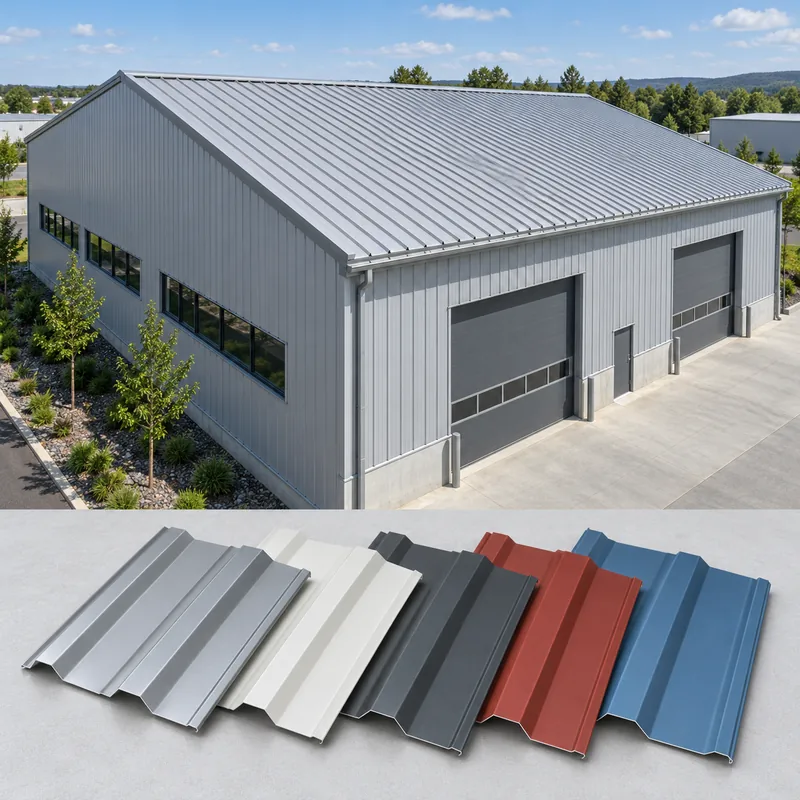
Metal roofing sheets give a solid, fully closed roof. They are the usual choice for warehouses, factory sheds, workshops, parking sheds and service areas where no daylight is needed through the roof. The profiled sheets are screwed to steel purlins on the main frame.
We offer galvanised steel, aluminium-zinc coated and colour-coated sheets as per project requirement. Sheet thickness, profile and colour are selected to suit the site, the purlin spacing and the look of the building. Colour-coated sheets come in shades that can match the walls or the company colours.
A single metal sheet heats up in summer and can be noisy in heavy rain. Where this matters, an insulated roof build-up can be used. The right slope, overlaps, flashing and fixings keep the roof free of leaks. Translucent sheets can be placed between the metal sheets to bring some daylight into the shed.
Upkeep is simple: clear leaves from the roof and gutters, check the screws, and touch up any scratched coating to stop rust. A check before every monsoon helps find loose fixings and blocked gutters early.
Roofing | Polycarbonate
Polycarbonate Roofing Sheets: Daylight with Rain Cover
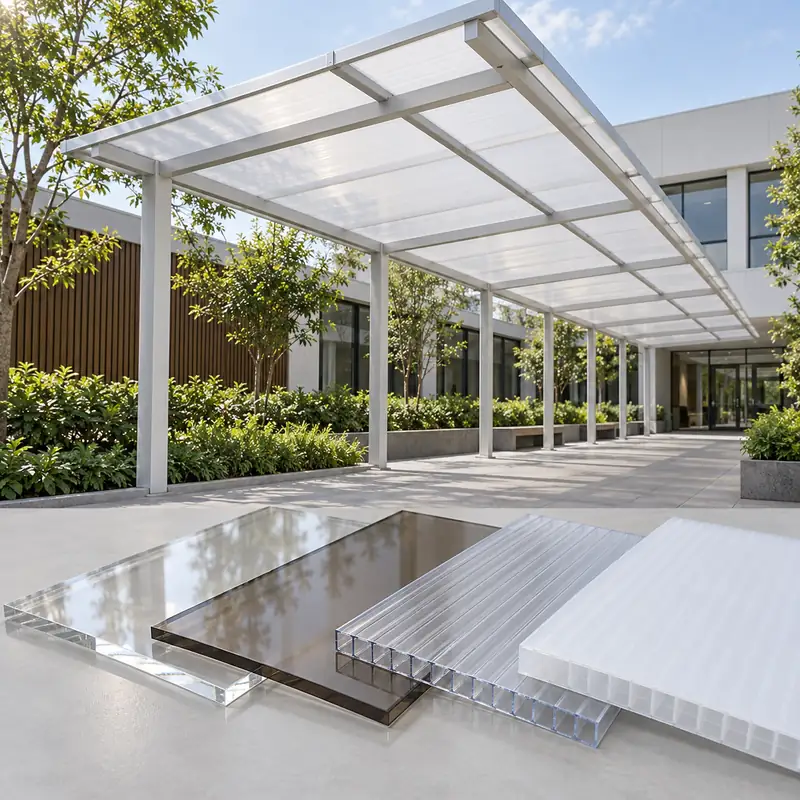
Polycarbonate roofing sheets are clear or tinted plastic sheets that let daylight in while keeping rain out. They are used for skylights, entrance canopies, covered walkways, pergolas and terrace covers where a solid roof would make the space dark. Polycarbonate is much lighter than glass and does not shatter on impact, so it is safer for overhead use.
There are three main types. Solid sheets look similar to glass, corrugated sheets follow the profile of metal roofing, and multiwall sheets have hollow channels that give better heat insulation.
Clear sheets let the most light through, while tinted, opal and heat-control sheets reduce glare and heat below. For outdoor roofs, the sheet must have a UV-protected surface so that it does not turn yellow. In hot summers, a tinted or heat-control sheet keeps the area below more comfortable than a clear one.
Polycarbonate expands in heat, so the fixings must leave room for movement. The open ends of multiwall sheets are sealed to keep out dust and insects. For cleaning, use mild soap and water instead of harsh chemicals.
Discuss Your Requirements
Need Help Choosing a Roofing Material?
Please share your site location, approximate size, photographs and the intended use of the covered area. Our team will recommend suitable materials and prepare a quotation for your project.

Material Questions
Questions About Tensile Fabrics and Roofing Materials
Short answers on how the main membrane fabrics and roofing sheets compare, and which one suits your project.
For most car parking shades, walkways and play areas, PVC-coated polyester with a PVDF top coat is the best fit, as it balances cost, strength and life. PTFE suits large permanent roofs that need a very long life, and ETFE suits roofs that must let in a lot of daylight.
PVC fabric is polyester coated with PVC. It costs less, comes in many colours and can be folded. PTFE fabric is fiberglass coated with PTFE. It costs more and cannot be folded, but it lasts longer, has better fire performance and stays bright white.
PVDF-coated PVC fabric comes with a warranty of up to 10 years. PTFE fabric is often quoted to last more than 30 years. The steel frame of a tensile structure is expected to last 25–30 years with routine maintenance.
ETFE is much lighter than glass, so the roof frame can be slimmer, and a single layer lets about 85% of visible light through. It is a good choice for skylights and atriums. Glass gives better sound insulation, so ETFE roofs may need an extra layer to reduce rain noise.
Choose HDPE shade net when you only need sun cover and want to keep the cost low. It lets air pass through but does not stop rain. If the area must stay dry, choose waterproof PVC or PVDF fabric instead.
Use metal sheets when you need a solid, low-cost roof and no daylight through it, such as for warehouses and parking sheds. Use polycarbonate sheets when you want natural light below, such as for walkways, skylights and terrace covers.