
Tensile Structure Design, Fabrication & Installation Process
Planning to Handover
How We Design, Make and Install Tensile Structures
ShadeCo India Private Limited follows a six-stage process to design, fabricate and install tensile structures, from the first site visit to final handover and maintenance support. Our in-house engineers, fabricators and installers handle every stage, so one team stays responsible for your project from start to finish. The same process applies to fabric shade structures, car parking shades, walkway canopies, polycarbonate roofing and metal roofing.
As an ISO 9001:2015 certified company working since 2010, we have followed this process on hospitals, schools, resorts, factories and housing projects across India and abroad. To begin, share your site location, approximate size and how the space will be used. You can also look through our completed projects and case studies to show us the kind of structure you have in mind.
- Site Visit and Consultation
- Design, 3D Views and Engineering
- Approvals and Site Preparation
- Fabric and Steel Fabrication
- Installation and Membrane Tensioning
- Inspection and Handover

The First Stage
Site Visit and Project Consultation

Every project starts with a site visit by our team. We study the area to be covered, how it will be used and what the site allows before suggesting a design.
During the visit, we take measurements and photographs, check the ground or roof where the structure will stand, and note access for vehicles and lifting equipment. We also look at nearby buildings, trees, drainage points and services that could affect the layout.
We then discuss your needs in detail: the type of structure, preferred shape and colour, budget and target date. A car parking shade, for example, needs clear bays and turning space, while an entrance canopy needs the right height and a good look from the road.
If a visit is not possible right away, site photographs, a rough sketch and approximate dimensions are enough for us to share first ideas. You can browse our tensile structures for reference.
The Second Stage
Tensile Structure Design, 3D Views and Engineering

Once the brief is clear, our engineers turn it into a design that is safe and practical to build. You receive 3D views or renders, so you can see how the structure will look on your site before anything is made.
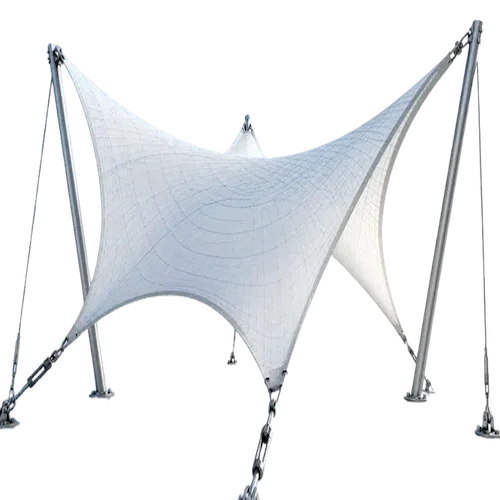
Form-finding comes first. It means working out the exact curved shape the fabric will take when it is pulled tight between its supports. This shape must keep the fabric taut, let rainwater run off and suit the look you want.
Next, we check the structure for wind and other loads. Steel frames are designed for wind loads as per IS 875 (Part 3), and the fabric grade is chosen to suit the span and site conditions.
The 3D shape is then flattened into cutting patterns. We allow for compensation, which means each fabric panel is cut slightly smaller than its final size so that it reaches the right tension once stretched. Final drawings are shared with you for approval before fabrication begins.
The Third Stage
Approvals, Scheduling and Site Preparation

After you approve the design, we fix the work schedule and prepare the site. The time needed depends on the scope of the project: some projects are completed in about a month, while larger or more complex ones take longer.
Foundation work is planned at this stage. Depending on the project, the footings and anchor bolts are built by ShadeCo India or by the client’s civil contractor using our drawings. Concrete footings need time to set before the steel frame can be fixed, so this step is started early.
We also agree working hours and site access with you. On busy sites, the work can be planned around daily use. At Arwachin Bharti Bhawan School in Delhi, part of the work was done during the holidays and the rest late at night after school hours.
Please share any limits on delivery times, parking or working space at this stage, so the workshop and site team can plan around them.
The Fourth Stage
Fabric and Steel Fabrication in Our Workshop

Fabrication starts once the drawings are approved. Our in-house team makes the fabric membrane and the steel frame to the same drawings, so every part fits together on site.
The fabric goes through patterning, cutting, joining and heat sealing. Heat-sealed seams join the PVC or PVDF coated panels into one membrane that stays waterproof along the joints.
Steel columns, rafters and brackets are cut, welded and given a protective finish such as powder coating, epoxy paint or hot-dip galvanizing, as per project requirement. Dimensions, welds and finish are checked before dispatch.
Finished parts are packed and sent to site by road, or by other routes where the site needs it. For Chandragiri Hills Resort in Nepal, the fabric was made in Delhi, flown to Kathmandu and taken up the hill by cable car.
The Fifth Stage
Site Installation and Membrane Tensioning
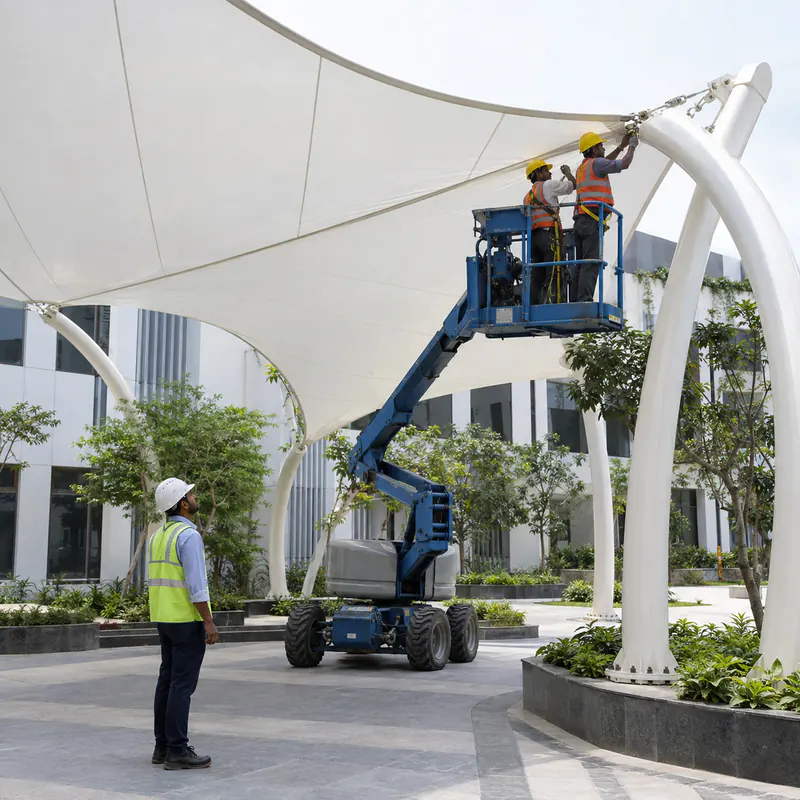
On site, our installation team first erects the steel frame and then fits and tensions the fabric. Every step follows the approved drawings.
Columns are fixed to the anchor bolts, and the frame is checked for level and alignment. The membrane is then lifted into place, connected at its edges and corners, and tensioned step by step until it is smooth and tight. Correct tension keeps the roof free of wrinkles, flapping and standing water.
Cranes, scaffolding or work platforms are used as the site allows, with safety barriers around the work area. At KBN Hospital in Gulbarga, most of the lifting and tensioning was done at night so that the hospital could stay open.
On occupied sites such as car parks, walkways or resorts, we close only the active work zone and keep the rest of the area in use.
The Sixth Stage
Final Inspection, Handover and Maintenance Support

Before handover, we inspect the finished structure and give you the documents you need to look after it.
The final check covers fabric tension, seams, fixings, drainage points, frame alignment and the coating finish. Any snag found during the check is corrected before the site is handed over.
At handover, you receive the warranty certificate, project drawings and a maintenance guide. We also explain simple care, such as washing the fabric with water and mild soap and keeping drains clear.
Maintenance and repair support can also be arranged after installation. A well-kept steel frame has an expected life of 25–30 years, and our PVDF fabric is backed by a warranty of up to 10 years. See our services for repair and maintenance support.
Discuss Your Requirements
Start Your Project with a Site Visit
Please share your site location, approximate size, photographs and the intended use with ShadeCo India. Our team will arrange a site visit, discuss suitable designs and prepare a detailed quotation for your project.

Project Questions
Questions About Our Tensile Structure Process
Short answers to the questions clients ask most often before starting a tensile structure or roofing project.
It works in six stages: a site visit, design and engineering with 3D views, approvals and site preparation, fabric and steel fabrication, site installation, and final inspection with handover. One in-house team handles all six stages.
Yes. Along with projects across India, ShadeCo India has completed work abroad, such as the resort tensile structure at Chandragiri Hills in Kathmandu, Nepal. The same design, fabrication and installation process is followed for these projects.
It depends on the scope. Smaller projects can be completed in about a month, while large or complex structures take longer. Foundation work, design approval, site access and weather all affect the timeline.
Yes. You receive 3D views or renders and final drawings for approval. Fabrication starts only after you approve the design.
It depends on the project. The footings and anchor bolts are built either by ShadeCo India or by the client’s civil contractor, using our foundation drawings.
Yes. We close only the area where work is going on, and the work can be planned at night or during holidays. Hospitals, schools and resorts have stayed open during our installations.
You receive a warranty certificate, project drawings and a maintenance guide. The PVDF fabric warranty runs for up to 10 years, while the steel structure should last 25–30 years if it is maintained.
Yes. Maintenance and repair support can be arranged after installation through our service team. The maintenance guide given at handover also explains routine care, such as cleaning the fabric and keeping drains clear.