
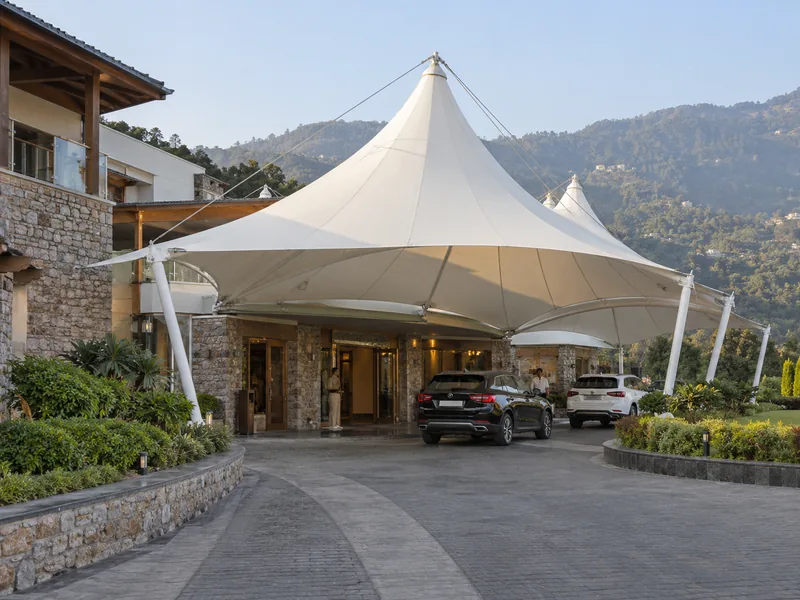
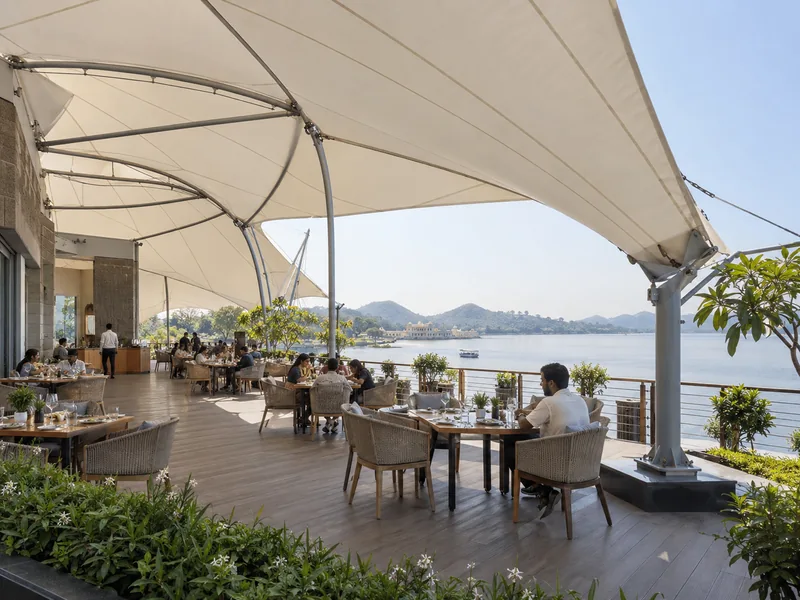
A resort tensile structure is a fabric roof or canopy used across a resort to shade arrival areas, dining decks, spa pavilions, walkways and activity zones. It is also known as a resort canopy, hospitality tensile structure, resort shade structure or resort membrane roof. It is used at hill resorts, beach resorts, jungle and wildlife lodges, lake resorts, farm stays and wellness retreats.
ShadeCo India Private Limited is a resort tensile structure manufacturer and supplier in India. We design, fabricate, supply and install arrival porch canopies, restaurant and bar deck roofs, spa and yoga pavilions, cottage walkway canopies and activity zone shades. Fabric options are PVC, PVDF and PTFE-coated fabric for rain cover and HDPE shade net for breezy, shade-only areas.
Planning starts with the resort's master plan and its views. We walk the site to see how guests move from arrival to rooms, dining, pool and activities. Then we place canopies where they help guests most, without blocking views or harming trees.
Resort Tensile Structure at a Glance
- Structure Types: Arrival porch canopies, dining deck roofs, spa and yoga pavilions, walkway canopies and activity shades
- Fabric: PVC, PVDF or PTFE-coated fabric for all-weather guest areas, or HDPE shade net for breezy outdoor zones
- Frame Material: Mild steel (MS) or galvanized steel (GI) masts and frames sized to sit lightly in the landscape
- Surface Finish: Automotive paint or powder coating in earthy or resort colours, over hot-dip galvanizing for coastal sites
- Suitable For: Hill, beach, lake and jungle resorts, farm stays, wellness retreats and heritage hotels
- Service Area: Resort canopies designed, supplied and installed across India
Why Choose a Resort Tensile Structure
A resort tensile structure lets guests enjoy outdoor spaces in sun and rain, which is the reason they chose a resort. Open decks, lawns and paths empty out in harsh sun or a sudden shower. Fabric roofs keep these spaces in use without closing them in.
Fabric also sits lightly in natural settings. Slim masts and soft curves suit hills, beaches and forests better than heavy concrete roofs. A common design style across the resort gives a clear identity that guests remember and share.
Types of Resort Tensile Structures
Resorts usually need several canopy types, planned together so they look like one family.
Arrival Porch Canopy
A canopy at the main entrance covers cars and guests during check-in. It is the first thing guests see, so it often carries a bold shape.
Restaurant and Bar Deck Roof
A roof over outdoor dining and bar decks keeps service running through lunch heat and evening showers, with views kept open.
Spa and Yoga Pavilion
Open-sided fabric pavilions host yoga, meditation and outdoor treatments, with curtains for privacy. For private day-bed shelters, see our tensile cabana structures.
Cottage Walkway Canopy
Canopies cover paths between cottages, restaurants and the pool, so guests move dry in the monsoon.
Activity and Kids' Zone Shade
Shades cover play areas, games zones and adventure activity starts. For lounger shades by the pool, see our pool deck tensile canopies.
Custom Resort Design: Views, Landscape and Site Climate
Views sell a resort, so every canopy is checked from the rooms, decks and paths. We keep roof edges low where they frame a view and raise them where they would block one. Shapes and colours are chosen to match the resort's architecture.
Trees, slopes and planting are treated with care. Masts are placed outside root zones where possible, and footings are kept small. Material is moved by hand or small equipment on tight paths to protect the landscape.
Each site has its own climate. Coastal resorts need galvanized steel and corrosion-resistant fittings, and hill resorts need designs for strong gusts on slopes. Work is phased in the off-season, so guests are not disturbed.
Technical Specifications
These details are a general guide for resort owners, hotel groups and hospitality architects. The final layout, forms and fabric are confirmed after we walk the site and review the master plan.
Structural & Fabric Specifications
| Specification | Details |
|---|---|
| Structure Types | Arrival Porch, Dining Deck, Spa and Yoga, Walkway, Activity Shade or Custom |
| Frame Material | Mild Steel (MS) or Galvanized Steel (GI) masts and frames |
| Surface Finish | Automotive Paint, Epoxy Paint, Powder Coating or Hot-Dip Galvanizing |
| Landscape Care | Masts outside root zones where possible, small footings and careful material movement |
| Fabric Types | PVC-Coated Polyester, PVDF-Coated Polyester, PTFE-Coated Glass Fibre or HDPE Shade Net |
| Fabric Weight | 750 – 900 GSM coated fabric for small pavilions; 1050 GSM or heavier for large deck roofs |
| Rain Protection | Waterproof with PVC, PVDF or PTFE; HDPE gives shade only |
| UV Protection | Up to 98% UV blocking, depending on the fabric |
| Temperature Resistance | −30°C to +70°C |
| Size and Height | Set by guest areas, views and landscape (Customizable) |
| Coastal and Hill Sites | Corrosion-resistant fittings near the sea; designs for gusts on slopes |
| Add-Ons | Provision for Lighting, Fans and Curtains |
| Wind Load Design | Masts, frames and footings designed as per IS 875 (Part 3) |
| Fabric Warranty | Up to 10 years on PVDF fabric, subject to manufacturer's terms |
Key Features
| Feature | Details |
|---|---|
| Waterproof PVC / PVDF / PTFE Fabric | Keeps dining decks, paths and pavilions dry for guests |
| UV-Resistant Coating | Blocks up to 98% of UV rays, depending on the fabric, in outdoor guest areas |
| Anti-Wicking Fabric | Sealed edges stop rain wicking into the fabric in heavy hill or coastal showers |
| Fungicide Finish | Fights mould in forest, lake and seaside humidity |
| Moisture and Corrosion Resistant | Galvanized steel and corrosion-resistant fittings for coastal and humid sites |
| Dirt-Resistant Top Coat | PVDF top coat helps fabric shed leaves, pollen and salt |
| Flame-Retardant Grade Available | FR-grade fabric on request for dining and event areas |
| All-Weather Performance | Masts and frames designed for site wind loads as per IS 875 (Part 3) |
Benefits of Resort Tensile Structures
Resort canopies keep guests outdoors and comfortable, which is the heart of a resort stay.
- Outdoor Spaces in Any Weather: Decks, paths and pavilions stay usable in sun and rain.
- Views Kept Open: Low-profile fabric roofs frame views instead of blocking them.
- Light on the Land: Slim masts and small footings protect trees and slopes.
- One Design Language: Matching shapes and colours give the resort a clear identity.
- Memorable Arrivals: A striking porch canopy sets the tone for the stay.
- Phased Work: Projects can be built in stages during the off-season.
Applications of Resort Tensile Structures
Hill and lake resorts use canopies over arrival porches, dining decks and viewpoints. Beach resorts shade pool areas, beach bars and cabanas with coastal-grade steel. For tents used as rooms, see our luxury glamping tents.
Jungle lodges and wellness retreats use open pavilions for yoga, dining and nature talks. Farm stays shade lawns, play areas and outdoor kitchens. Heritage hotels add light canopies in courtyards without hiding historic walls.
Resort Tensile Structure Price in India: What Affects the Cost
The cost of a resort tensile structure depends on the number of canopies, their sizes and their forms. A single arrival porch costs far less than a full resort package.
Fabric type, coastal-grade protection, finishes, curtains, lighting and access on difficult terrain change the figure. For resort canopies, PTFE fabric is at the upper end of cost and HDPE at the lower end. Phasing work over the off-season can spread the investment.
For a quotation, share the resort master plan or photos, the areas you want to cover, any design references and the location.
How We Design and Install a Resort Tensile Structure
A resort is a place of calm, so we plan design and site work to protect the guest experience and the land.
- Step 1 – Site walk and brief: We walk the resort, study views, trees and slopes, and agree the areas and style with the owner.
- Step 2 – Concept and drawings: We propose a family of canopy forms, colours and positions, with views from rooms and decks.
- Step 3 – Engineering: Masts, frames and footings are designed for the site exposure and wind load as per IS 875 (Part 3).
- Step 4 – Fabrication: Steel is finished for the site climate in our workshop, and fabric is made in the chosen colours.
- Step 5 – Installation: Work is phased in the off-season or quiet zones, with care around trees and paths.
- Step 6 – Handover: We check every canopy, clean up the site and give the resort team a seasonal care guide.
Resort Tensile Structure Design and Installation Solutions
ShadeCo India builds canopies for hill, beach, lake and jungle resorts across India. Our team plans every canopy around views, landscape and guest comfort, so the resort feels complete and calm.
Why Work with ShadeCo India
ShadeCo India was founded in 2010 and has more than 15 years of experience in tensile structures, along with ISO 9001:2015 certification. Our engineers, fabricators and installers work in-house, which helps on remote resort sites with tight access.
Our clients include Delhi Public School, Food Corporation of India, L&T, TATA, Adani, Al-Karim University, Indian Oil, Omaxe, VIVO, Lakhani, Indian Railways and Reliance. Several other organizations across India have also engaged us.
On every resort canopy, we check views, tree clearances and drainage before handover. Delivery typically takes 3–6 weeks for each phase, depending on scope and customization.
You can also see our wedding lawn tensile structures, water park shade structures and the full range of tensile structures.
Explore Our Projects & Design References
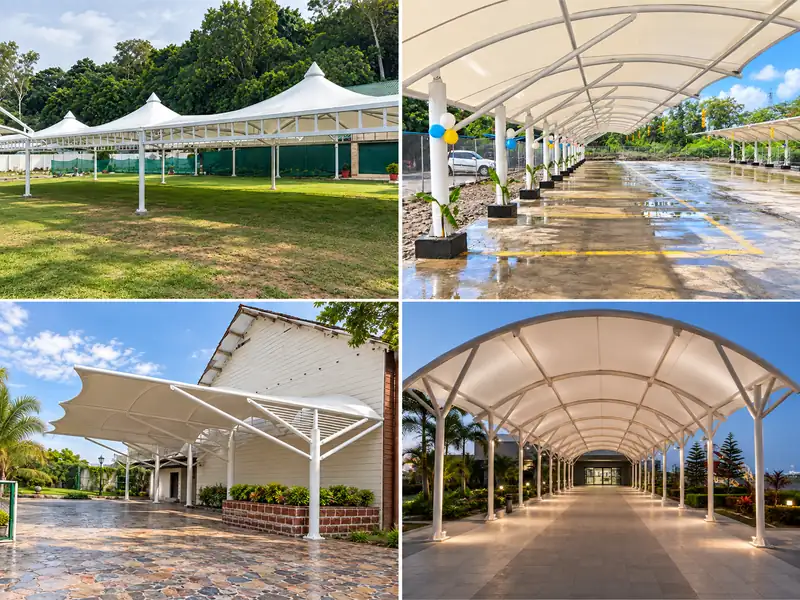
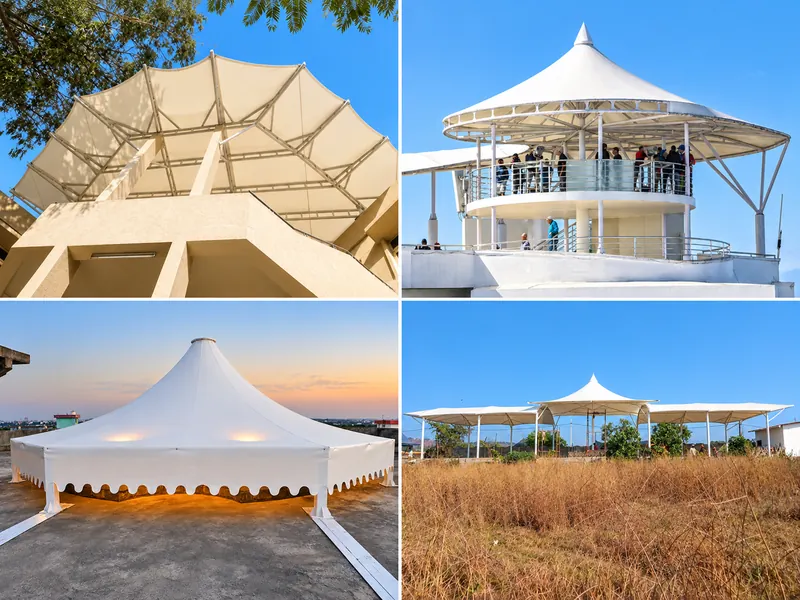
Our canopies over lawns, entrances, parking and terraces appear in these references. They help when choosing a design language and fabric colours for a resort, while each resort canopy is planned around its own views and landscape. View more ShadeCo India projects.
Service Availability Across India
ShadeCo India provides resort tensile structure solutions across major cities and regions in India. Resort projects can be taken up in and around Delhi, Gurugram, Faridabad, Noida, Lucknow, Chandigarh, Ludhiana, Jaipur, Jodhpur, Shimla, Dehradun, Haridwar, Bhopal, Indore, Gandhinagar, Ahmedabad, Patna, Muzaffarpur, Mumbai, Pune, Bengaluru, Hyderabad, Chennai and Kochi. Hill, coastal and forest locations are covered based on project scope and site requirements.
Each resort project is planned around the local climate, access roads and the guest season. We phase work in quiet periods and keep noisy activities away from occupied cottages.
Planning a Resort Tensile Structure?
If you are building or upgrading a resort, ShadeCo India can advise on canopy types, positions and a design style for the whole property.
We request you to share the master plan or site photographs, the areas you want to cover and any design references. Please also mention the location and your off-season dates, so our team can plan the work.
Please call +91-9873975818, email info@shadecoindia.com, or get in touch through our contact page.
FAQ
Frequently Asked Questions - Resort Tensile Structure
A resort tensile structure is a fabric roof or canopy used at a resort to shade arrival areas, dining decks, pavilions, walkways and activity zones. It keeps guests comfortable outdoors. It suits hill, beach, lake and jungle resorts.
The cost depends on the number of canopies, sizes, forms, fabric and site access. PTFE costs the most and HDPE the least for resort work. ShadeCo India quotes from the master plan or photos, the areas to cover and location.
PVC or PVDF-coated fabric suits guest areas that need rain cover, and PVDF stays cleaner in leafy and coastal settings. PTFE suits long-life landmark roofs. HDPE suits breezy zones that only need shade.
Yes. Coastal resorts get galvanized steel and corrosion-resistant fittings, and hill sites are designed for gusts on slopes. All frames follow the site wind load as per IS 875 (Part 3).
Resort canopy frames in galvanized steel are expected to last 25–30 years with seasonal care. PVDF fabric used at resorts carries a warranty of up to 10 years, subject to the manufacturer's terms.
No, when planned properly. We check views from rooms and decks and keep masts outside root zones where possible. Footings are kept small and material is moved carefully.
Each phase is usually delivered in 3–6 weeks, depending on scope and design. Larger resorts often build in phases across off-seasons.
Yes. ShadeCo India designs, fabricates and installs arrival canopies, deck roofs, pavilions, walkways and shades. Planning them together gives the resort one design language.
