
By Akram Ansari, Founder, ShadeCo India · Published: · Updated:
These maintenance tips for long-lasting tensile fabric structures are simple habits that keep a fabric roof clean, tight and safe for many years. You may also hear this called tensile structure maintenance, tensile roof care or fabric canopy upkeep. Whatever the name, the idea is the same: small, regular checks cost far less than big repairs later.
A tensile roof is built to last, and its frame can serve for 25 to 30 years when it is cared for well. But it lives outdoors every day. Sun, dust, rain, leaves, bird droppings, wind and passing vehicles all leave their mark. Without care, a bright, tight roof can turn grey, loose and leaky long before its time.
This guide is written for building owners, facility managers and site staff. It shows what you can safely do yourself, what to look for, how often to do it and when it is time to call in a trained team.
Regular inspection and gentle cleaning are the simplest ways to increase the life of tensile fabric structures. Small issues like loose bolts, blocked drainage or minor fabric damage should be fixed before they become costly repairs.
At ShadeCo India Private Limited, we look after fabric roofs at offices, schools, factories, hotels and housing societies, including roofs put up by other companies. The tips below come from what we see on those visits: the problems that are easy to prevent and the ones that grow when they are missed.
What Wears Out a Tensile Structure
Knowing what causes wear makes it easier to spot early. Most problems start small and come from a handful of everyday causes.
- Dirt and dust: A layer of dust traps moisture and makes the fabric look grey. Over time it can also allow mould to grow in damp corners.
- Trapped water: Blocked gutters or a loose patch of fabric let water collect on the roof. Water is heavy, and a pool can stretch the fabric out of shape.
- Loss of tension: Fabric relaxes a little over the years, and fittings can loosen. A loose roof flaps in wind, which wears the fabric and the joints faster.
- Rust on steel: A scratch in the paint or powder coat lets moisture reach the steel. Left alone, the rust spreads under the coating.
- Knocks and scrapes: Vehicles, ladders and branches can scratch columns or rub against the fabric. Even a small cut can grow in the wind.
A Simple Maintenance Calendar
The easiest way to keep up with care is to tie it to the calendar. The table below is a good starting point for most sites in India. Busy public sites, dusty areas and sites near trees or the sea may need more frequent checks.
| When | What to Do | Who Does It |
|---|---|---|
| Every month | Walk round and look up; clear leaves from gutters you can reach safely | Site staff |
| Before the monsoon | Clean gutters and drains, check tension, tighten fittings | Trained team |
| After the monsoon | Wash the fabric, look for mould, stains, rust and damage | Trained team |
| After a storm | Look for torn fabric, loose cables and bent steel | Site staff first, then a trained team |
| Once a year | Full check of fabric, steel, cables, fittings and footings | Trained team |
Many owners find it easier to hand this calendar to one team through an annual maintenance contract (AMC). That way the visits happen on time, and nobody has to remember them.
What Site Staff Can Safely Do
A lot of good care can be done from the ground by your own staff, with no special tools. The key rule is simple: stay on the ground or on a safe, fixed platform, and never climb onto the fabric.
- Look up during a walk round: Check for sagging, wrinkles, flapping, stains or pools of water. Take a photo of anything unusual so you can compare it next time.
- Watch the roof in rain: Rain shows where water flows and where it does not. Note any spot where water drips onto paths or cars, or stays on the roof after the rain stops.
- Check the base of each column: Look for rust, cracks in the concrete or water standing around base plates. Keep the area clear of soil and rubbish.
- Remove loose leaves and litter: Clear what you can reach from the ground with a soft broom or by hand. Do not poke at the fabric with sharp poles.
- Keep a simple log: Write down the date, what you saw and any photos. A log helps the maintenance team find patterns and fix the root cause.
Cleaning the Fabric the Right Way
Coated fabric is tough, but its surface coating is what protects it. Rough cleaning can strip that coating and shorten the life of the roof. Gentle methods work best.
| Do | Do Not |
|---|---|
| Use a soft brush or sponge | Use wire brushes or scouring pads |
| Use mild soap and clean water | Use bleach, petrol, thinner or strong solvents |
| Rinse with low-pressure water | Blast the fabric with a high-pressure jet |
| Use a fabric-safe cleaner if the maker advises one | Try unknown cleaners on the whole roof |
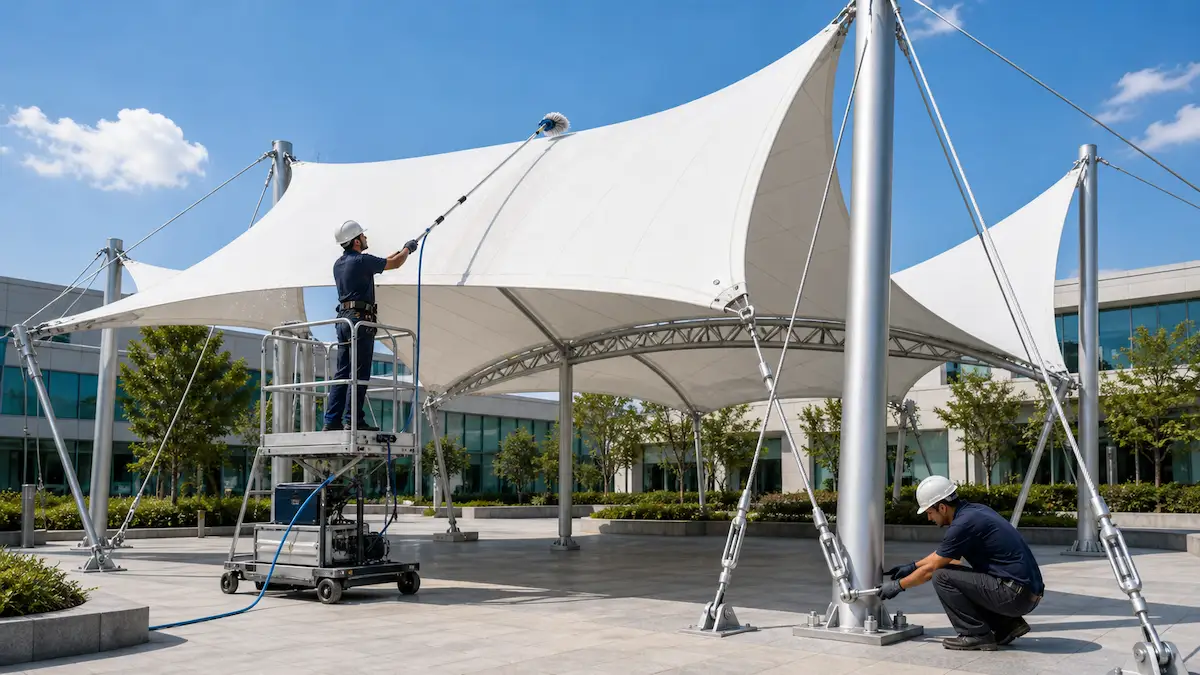
| Clean from a lift or with rope access and a harness | Walk or kneel on the fabric |
Bird droppings and tree sap are worth removing soon, before they bake in the sun and stain. Fabric with a PVDF top coat is easier to keep clean, because rain washes off much of the dust on its own.
Keeping Water Moving
A tensile roof is shaped to shed water quickly. When water stays on it, something has changed, and it should be checked soon.
- Clear gutters and outlets: Leaves and plastic bags are the usual blockers. A blocked outlet can send water over the edge onto people or cars.
- Watch for low spots: If a dip appears in the fabric, it often means tension has dropped nearby. Re-tensioning usually brings the shape back.
- Do not push water off with poles: Pushing a heavy pool from below can tear the fabric or overload a fitting. Let a trained team drain it safely.
- Check where water lands: Water should fall into a drain, not onto a path, a doorway or a parked car. If the drip line has moved, the roof shape or a gutter may need attention.
Caring for Steel, Cables and Fittings
The frame and hardware carry every load the roof sees. They rarely fail without warning, so regular checks catch most issues early.
- Touch up scratches: Small chips in paint or powder coat should be cleaned and touched up before rust spreads. Ask for the matching colour and primer.
- Check bolts and turnbuckles: Fittings can work loose with wind and vibration. A trained team checks and tightens them during each visit.
- Look at cables: Rust, broken strands or a cable rubbing on the fabric are signs to act on. Cables should run smooth and tight.
- Protect columns from vehicles: In car parks, a dented column is a common sight. Wheel stops or bollards help keep cars away from the steel.
Seasonal Care Across India
India's weather changes a lot through the year and from place to place. Matching your care to the season keeps the roof ready for what comes next.
- Summer heat and dust: Dry winds coat the fabric in fine dust, and strong sun works on every surface. A gentle wash before the hottest months keeps the fabric bright and lets it reflect more heat.
- Monsoon rain: This is the season that tests drainage and tension the most. Gutters should be clear and fittings checked before the first heavy rain, not after it.
- After the rains: Damp corners can grow mould, and wet leaves stick to the fabric. A wash and a close look for stains and rust are worth doing once the rains end.
- Winter smog and fog: In many northern cities, smog leaves a grey film on light fabrics. A soft wash at the end of winter brings back the colour.
- Coastal sites: Salt air settles on steel and fittings all year round. Rinsing the frame with clean water and checking for rust more often helps a lot near the sea.
What Happens During a Professional Visit
If you have not booked a maintenance visit before, it helps to know what to expect. A good visit is planned, safe and ends with clear records.
- Choosing the plan: You can book a one-time clean, periodic visits or an AMC that includes a check before and after each monsoon. The right plan depends on the size of the roof and how dusty or busy the site is.
- Safe access: The team reaches the roof with scissor or boom lifts, rope access or ladders with a harness. The area below is closed off while they work.
- Cleaning and checks: The fabric is washed gently, gutters and drains are cleared, and bolts and tension are checked and adjusted where needed. Any damage is noted for repair.
- Report and photos: After the visit you get a condition report with photos, plus photos taken before and after the wash. This makes it easy to see what was done and what needs attention next.
Care Tips by Structure Type
Every structure faces its own mix of wear. These quick tips help you focus on what matters most for each type.
- Car parking shades: Dust from vehicles builds up fast, and columns get knocked. Check column bases often and keep drip lines away from parked cars. See our parking shade structures.
- Shade sails: Sails have few fixing points, so each one matters. Check the corner fittings and keep tension even, especially before strong winds. See our shade sails.
- Entrance canopies: They are always on show, so stains stand out. Regular gentle washing keeps them bright and welcoming.
- Walkway covers: Long runs collect leaves along the gutters. Clear them before the rains so water does not spill onto people below.
- Atrium and large roofs: High roofs need lifts or rope access for any close check. Plan these visits with a trained team rather than staff.
Warning Signs That Need a Trained Team
Some problems should not wait for the next planned visit. If you see any of these, call a trained team soon and keep people away from the area if it looks unsafe.
- A tear, cut or open seam: Damage grows fast in wind. A quick patch or seam re-weld is much cheaper than a new panel.
- Water that keeps pooling: Repeated ponding points to lost tension or a drainage fault. It needs a proper fix, not just draining.
- Loud flapping in wind: A tight roof hums but does not flap. Flapping means tension has dropped and wear is speeding up.
- Rust that flakes or bubbles: This is beyond a simple touch-up. The steel may need cleaning back and repainting.
- A bent column or moved base: This can affect the whole structure. It should be checked by engineers before the roof is used as normal.
For tears, sagging and storm damage, see our roof repair services. For planned cleaning and check-ups, see our cleaning and maintenance services. After each visit, you receive a short report with photos.
Good Design Makes Care Easier
If you are still planning a new structure, think about upkeep now. A fabric with a PVDF top coat stays cleaner. Gutters placed where they can be reached are easier to clear. Turnbuckles placed within reach of a lift make re-tensioning simple. Asking about these at the design stage saves effort for years. Read more in our guide to the design process of tensile structures.
Frequently Asked Questions
Common questions from owners and site staff about caring for tensile fabric roofs.
Your own staff can do a lot from the ground. They can walk round and look for sagging, stains, flapping or pooled water, and watch how rain flows off the roof. They can keep column bases clear, clear leaves they can reach safely and keep a simple log with photos. Climbing onto the fabric, cleaning at height and adjusting fittings should be left to a trained team.
No, you should not walk, kneel or stand on a tensile fabric roof. The fabric is strong when it is pulled tight between supports, but a person's weight on one small spot can stretch, crease or tear it. Shoes can also scratch the coating. Close checks and cleaning at height should be done from a scissor or boom lift, or by rope access with a harness.
Water collects on a tensile roof when something has changed its shape or blocked its drains. The usual causes are blocked gutters or outlets, fabric that has lost some tension, or a loose fitting that lets one area dip. Once water pools, its weight stretches the fabric further and the pool grows. Clear the drains, then have a trained team check and restore the tension.
Remove bird droppings and stains soon, before the sun bakes them in. Wet the area with clean water, then wipe gently with a soft brush or sponge and mild soap. Rinse well with low-pressure water. Do not scrape, and avoid bleach, petrol or strong solvents, as they can damage the coating. For high roofs, have the cleaning done from a lift by a trained team.
A tensile roof flaps in the wind when its fabric has lost tension. A well-tensioned roof stays firm and may hum, but it should not flap. Fabric relaxes a little over time, and fittings can loosen with wind and vibration. Flapping wears the fabric and joints faster, so it is worth acting on. A trained team can re-tension the fabric using the turnbuckles and fittings.
After a storm, first look from a safe distance for torn fabric, loose or hanging cables, bent columns or anything that has fallen onto the roof. Keep people away from any area that looks damaged. Check for pooled water and blocked drains. Take photos and share them with your maintenance team. Even if all looks fine, a quick professional check of fittings and tension is wise after a strong storm.
Stop rust by catching coating damage early. Look over columns, brackets and base plates for chips and scratches, especially in car parks and near the sea. Clean small spots, then apply primer and matching paint before rust spreads. Keep water and soil away from base plates. Rust that flakes or bubbles needs the steel cleaned back and repainted by a trained team.
A maintenance log shows how your structure changes over time. By noting the date, what you saw and adding photos, you can spot patterns such as a gutter that always blocks or a corner that keeps losing tension. This helps the maintenance team fix the root cause rather than the same symptom again. It also gives a clear record for audits, handovers and warranty discussions.
How Can You Make a Tensile Structure Last Longer?
You can make a tensile structure last longer by keeping it clean, keeping water moving and keeping everything tight. Clean the fabric gently, clear gutters before the rains, touch up steel scratches early and have fittings and tension checked by a trained team. Above all, act on small signs such as a dip, a stain or a flap before they grow.
If you would like a check-up, a cleaning visit or a maintenance plan for your fabric roof, contact ShadeCo India to arrange a site visit and quotation.