
Roof repair services for tensile structures fix damage to the fabric, the seams, the steel frame or the roof sheets, so the structure is safe and watertight again. This service is also called tensile fabric repair, membrane roof repair or shade structure repair.
ShadeCo India repairs tensile roofs, canopies, car parking sheds, walkway covers and shade sails, whether we built them or another company did. Our in-house team inspects the damage, recommends a repair or a replacement, and then does the work with the same welding and tensioning methods we use on new structures.
Most fabric roofs do not fail all at once. A small tear, an open seam or a loose cable usually comes first. Fixed early, these problems are quick to repair. Left alone, wind and rain can turn them into a much bigger job.
Common Problems in Tensile Fabric Roofs
These are the faults we see most often when we are called to a damaged shade structure.
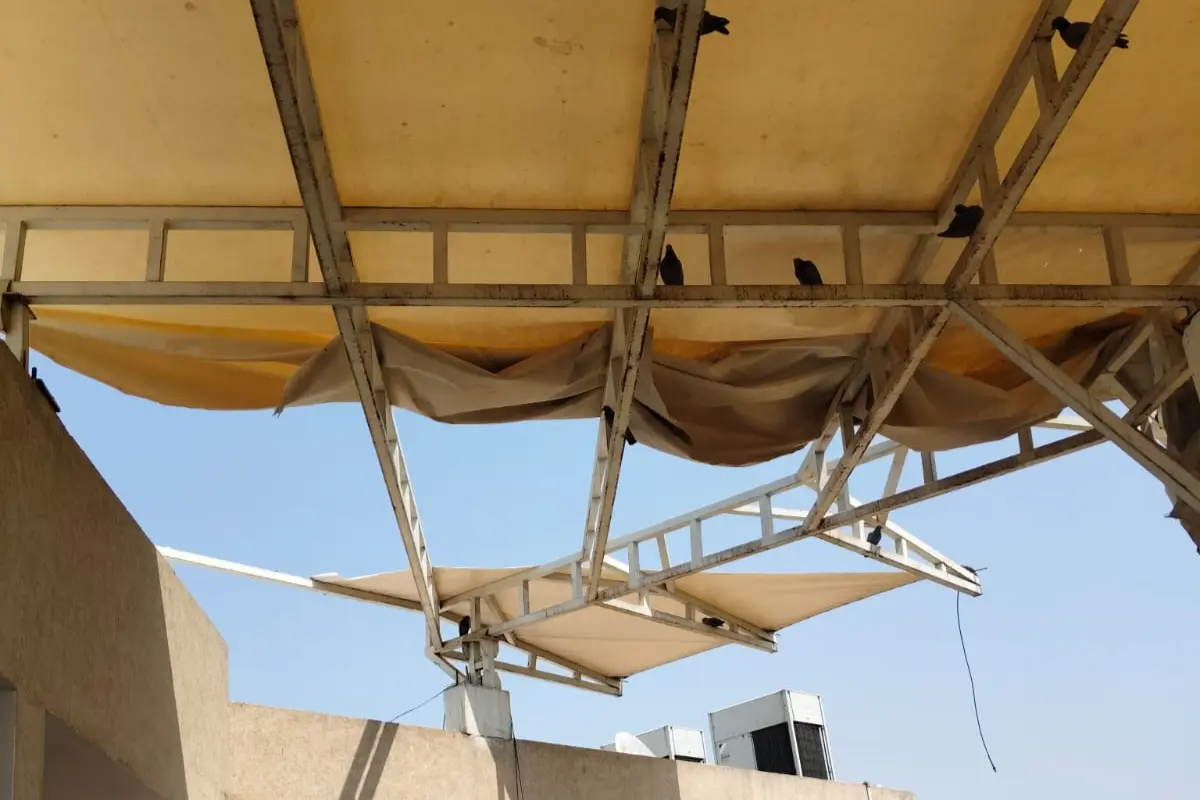
- Tears and Punctures: Caused by falling branches, sharp objects, storms or vandalism.
- Open Seams: Welded joints can peel with age, high heat or poor original fabrication.
- Sagging Fabric: The membrane slowly loses tension through creep, which leads to flapping and rainwater ponding.
- Leaks at Edges: Water gets in where the fabric meets clamps, gutters or the building wall.
- UV Ageing: After many years in strong sun, the coating becomes stiff and brittle.
- Rusted Steel: Damaged paint lets rust attack the frame, cables and fittings.
Inspection and Damage Report
Every repair starts with a site inspection. Our team looks at the whole structure, not only the damaged spot, because a tear is often a sign of a deeper cause such as low tension or a blocked drain. After the inspection, you receive photos of the damage and a written report with our recommendation, followed by a quotation for the repair.
- Fabric and Seams: Tears, open welds, worn coating and dirty or stained areas.
- Tension and Shape: Sagging, wrinkles and spots where water collects.
- Frame and Fittings: Rust, bent members, loose bolts and cable condition.
- Drainage: Gutters, outlets and the path that rainwater takes off the roof.
Repair Work We Carry Out
Once you approve the quotation, our team carries out the repair on site. Work at height is done with full-body harnesses and PPE.
- Tear Patching: Small tears and punctures are covered by hot-air welding a matching fabric patch over the damage.
- Seam Re-Welding: Open or peeling seams are cleaned and welded again.
- Re-Tensioning: Turnbuckles and fittings are adjusted to bring back the design tension and shape.
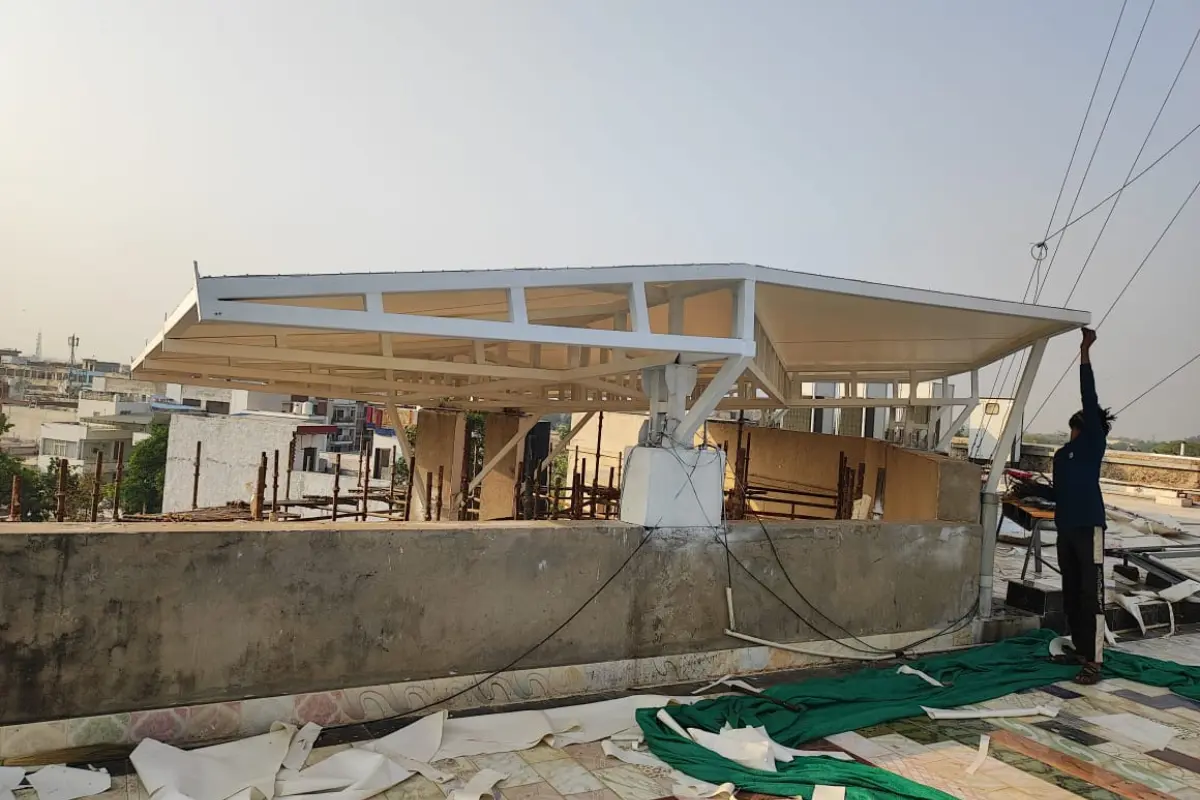
- Sheet Replacement: Broken polycarbonate or metal roofing sheets are taken out and replaced.
- Steel Repair and Repainting: Rusted areas are cleaned, repaired and repainted, and damaged members are replaced.
- Storm Damage Repair: Torn fabric and bent frame parts are put right after storms and high wind.
Repair or Replace the Fabric?
Patching works well when the damage is local and the fabric around it is still sound. A full replacement is usually the better choice when the coating has turned brittle over large areas, seams are failing in many places, or the fabric can no longer hold its tension. New patches also do not bond well to badly aged fabric.
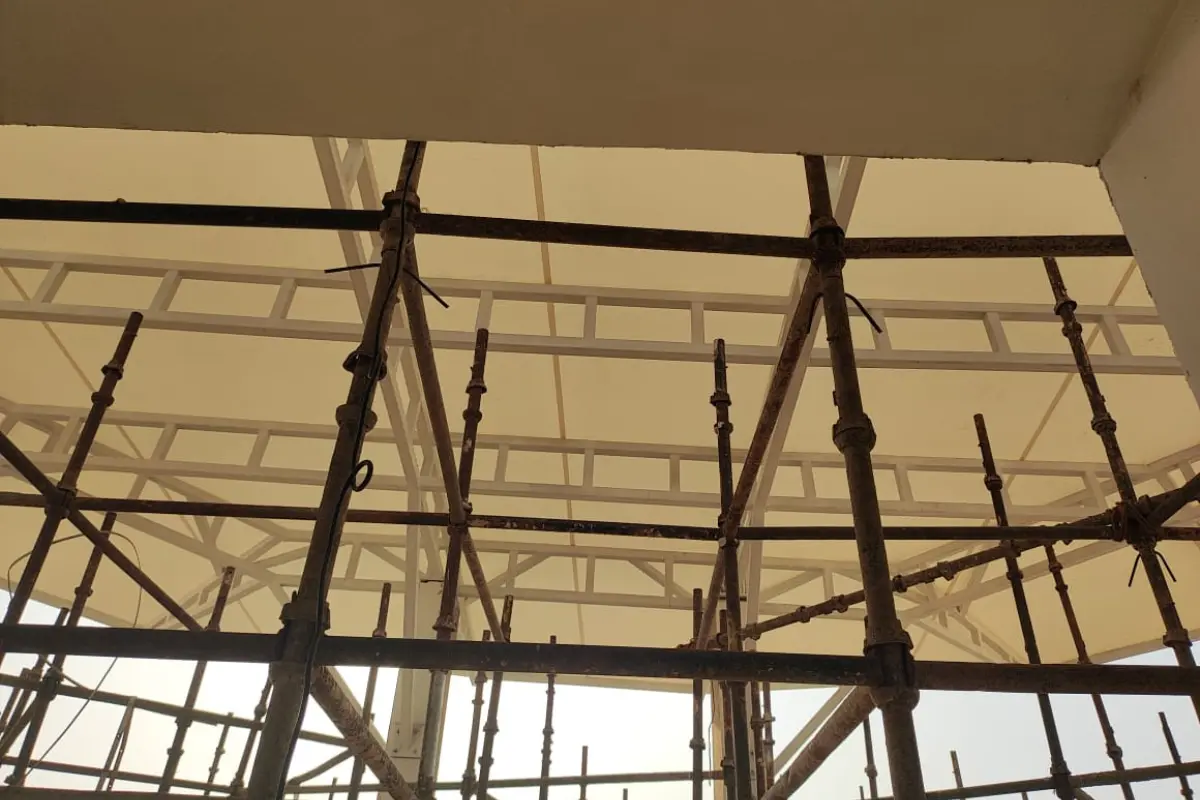
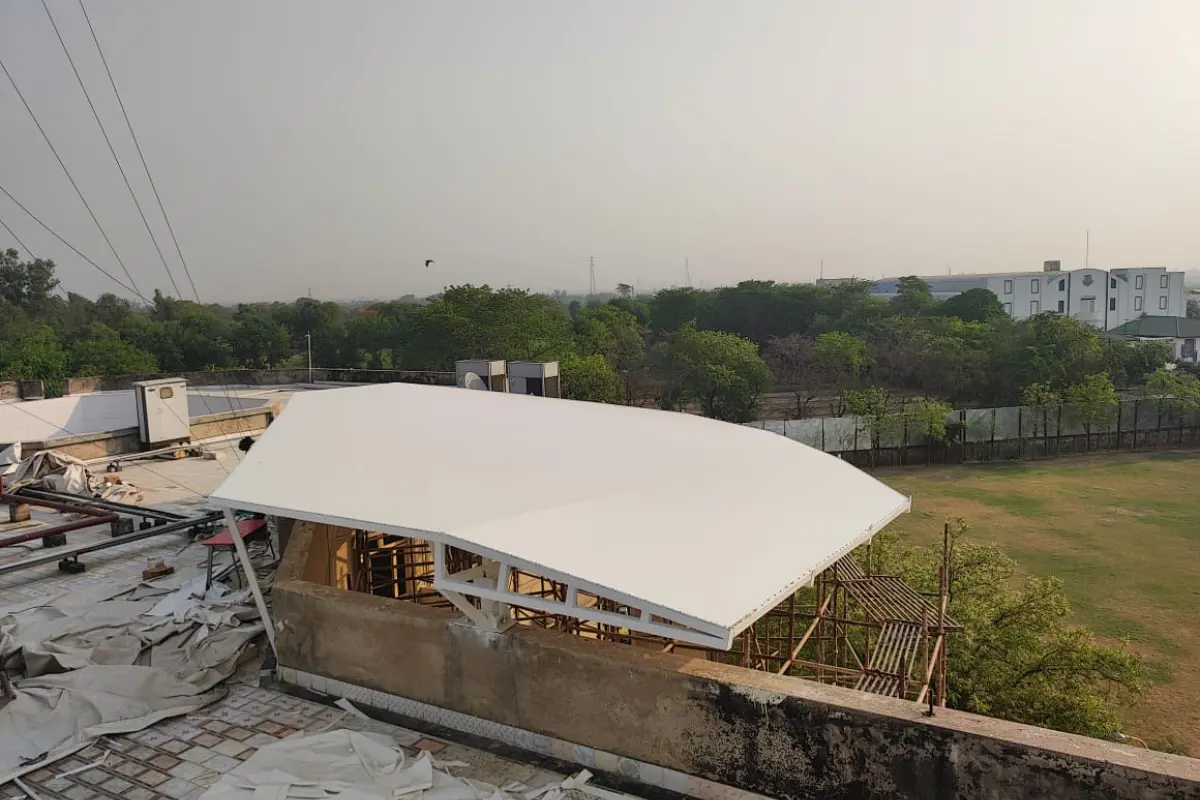
For a full replacement, our team measures the frame points on site and prepares a new cutting pattern, even when the original drawings are lost. The new membrane is made in our Delhi workshop and fitted to the existing frame once the steel, cables and fittings have been checked. A new PVC membrane with a PVDF top coat comes with a warranty of up to 10 years.
Many repairs can be avoided with regular care. Our cleaning and maintenance service covers routine cleaning and periodic checks.
Why Choose ShadeCo India for Roof Repair
Repairing a tensile roof well needs the same skills as building one.
01
Repairs by a Tensile Structure Maker
Our team uses the welding, patterning and tensioning skills from our new projects.
02
Any Make of Structure
We repair structures built by ShadeCo India and by other companies.
03
Clear Report First
Photos, a written report and a quotation help you decide before any work starts.
04
Replacement Without Drawings
Frame points measured on site give a new membrane that fits the old frame.
How a Repair Job Works
A repair moves from first photos to a checked, finished roof in these steps.
- Share photos of the damage, the site location and the size of the structure.
- Our team inspects the structure on site.
- You receive photos, a written report and a repair quotation.
- After approval, patches, parts or a new membrane are prepared in our workshop.
- The repair is carried out on site with harnesses and PPE for work at height.
- The repaired area is checked for tension, drainage and fixing before handover.
Is Your Tensile Roof Torn, Sagging or Leaking?
ShadeCo India can inspect and repair your tensile roof, canopy, parking shed or shade sail, including structures built by other companies. Kindly send us clear photographs of the damage, the site location and the approximate size of the structure. Our team will review them and contact you to arrange an inspection.
faq
Frequently Asked Questions About Roof Repair Services
ShadeCo India roof repair services include site inspection, a photo report and quotation, and the repair work itself. Our team patches tears, re-welds open seams, re-tensions sagging fabric, replaces broken polycarbonate or metal sheets, and repairs and repaints rusted steel. When the fabric is beyond repair, we make and fit a full replacement membrane. Storm damage to fabric and frames is also repaired.
Yes, ShadeCo India repairs tensile roofs, canopies, parking sheds and shade sails built by any company, not only our own. Our team first inspects the structure to understand its fabric type, frame and fixing details. Because we design, make and install tensile structures ourselves, we can work on most systems, and we can make a new membrane to fit an existing frame even without the original drawings.
Damage to a tensile fabric roof usually comes from a few common causes. Falling branches, sharp objects, storms and vandalism cause tears and punctures. Low tension, caused by creep over time, makes the fabric sag and flap, and lets rainwater collect. Welded seams can peel with age or high heat, and many years of strong sun make the coating stiff and brittle. Rust can also weaken the steel frame and fittings.
Yes, most tears in a tensile fabric roof can be repaired if the damage is local and the fabric around it is still sound. Our team cleans the area and hot-air welds a matching fabric patch over the tear, which seals it and restores strength. Open seams are re-welded in the same way. If the coating around the tear is badly aged and brittle, a patch will not bond well, and replacement is advised.
Tensile fabric should be replaced when repairs would not last. Signs include a coating that has turned stiff and brittle over large areas, seams failing in many places, and fabric that can no longer hold its tension even after adjustment. In these cases a new membrane is fitted to the existing steel frame after the frame, cables and fittings are checked, which costs less than building a new structure.
When the original drawings are not available, our team measures the existing frame on site. The positions of corners, fixing points and edges are recorded, and a new cutting pattern is prepared from these measurements. The membrane is then cut and welded in our Delhi workshop and installed on the existing frame. A new PVC membrane with a PVDF top coat comes with a warranty of up to 10 years.
After the roof inspection, you receive photos of the damage and a written report that explains the problem and our recommended repair. We also send a quotation for the work. This lets you compare a repair with a replacement and decide before any work starts. Once you approve the quotation, our team prepares the patches, parts or new membrane and plans the site work.
Yes, ShadeCo India repairs storm damage to tensile roofs and shade structures. Strong wind can tear fabric, pull out fixings and bend steel members. Our team inspects the structure, makes it safe, and then repairs or replaces the torn fabric and damaged frame parts. The structure is re-tensioned and checked for drainage and fixing before it is handed back for use.
