
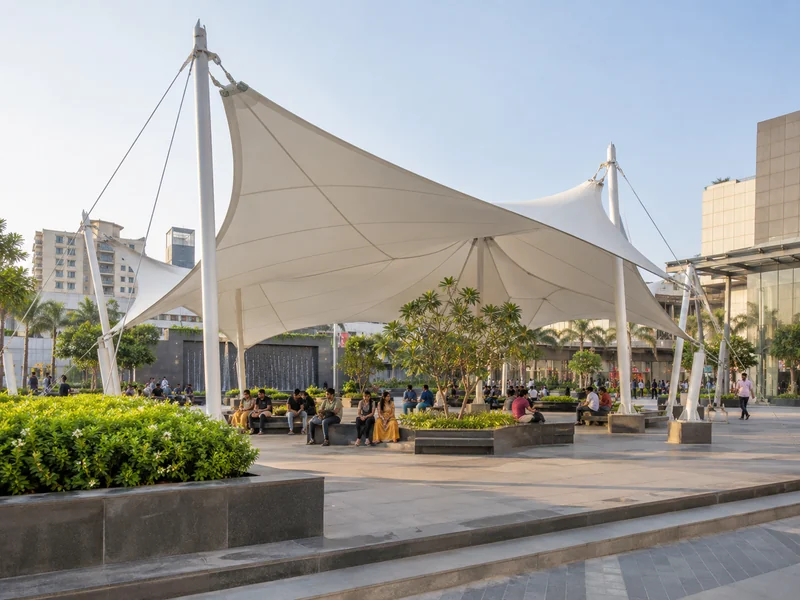
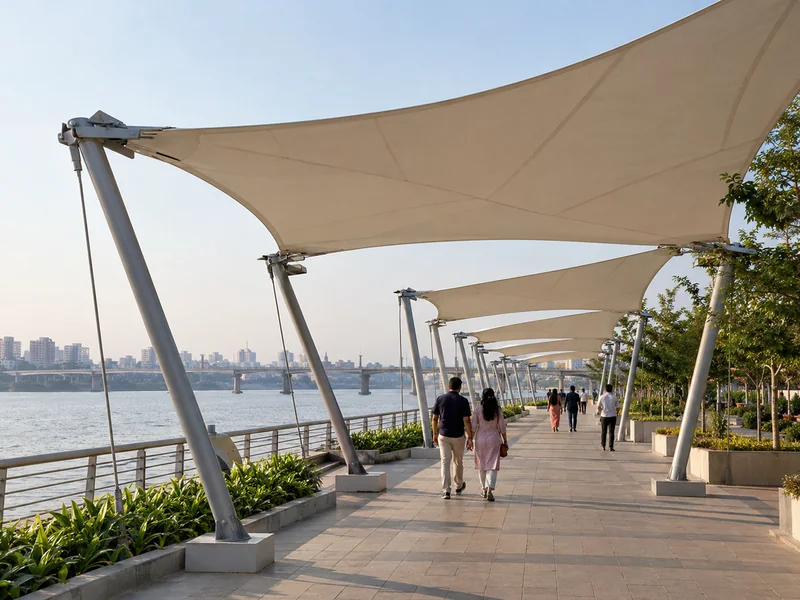
A public plaza shade structure is a fabric canopy that shades open civic spaces where people walk, meet and sit. It is also known as a plaza canopy, urban shade structure, civic square shade or promenade tensile canopy. It is used in city squares, riverfronts, smart city streets, mall forecourts, station plazas and heritage precincts.
ShadeCo India Private Limited is a public plaza shade structure manufacturer and supplier in India. We design, fabricate, supply and install landmark mast canopies, clustered umbrella canopies, linear shade spines, seating island canopies and event and market canopies. Fabric is selected from PVC, PVDF and PTFE-coated fabric for rain cover and HDPE shade net for open, breezy shade.
Planning starts with how people use the plaza through the day. We map walking routes, seating, gathering points, vendor zones and event spaces. Then we mark fire tender routes, utility lines and heritage views that the shade must respect.
Public Plaza Shade Structure at a Glance
- Structure Types: Landmark mast canopies, umbrella clusters, linear shade spines, seating islands and event canopies
- Fabric: PVC, PVDF or PTFE-coated fabric for all-weather shelter, or HDPE shade net for breezy daytime shade
- Frame Material: Mild steel (MS) or galvanized steel (GI) masts, cables and frames with tamper-resistant fixings
- Surface Finish: Hot-dip galvanizing or powder coating for public spaces, with epoxy or automotive paint in civic colours
- Suitable For: City squares, riverfronts, smart city streets, mall forecourts, station plazas and heritage precincts
- Service Area: Civic plaza shades designed, supplied and installed across India
Why Choose a Public Plaza Shade Structure
A public plaza shade structure makes hard, paved squares usable in the daytime. Stone and concrete absorb heat, so open plazas often stay empty until evening. Shade over seating and walking routes brings people back during the day.
A well-designed canopy also gives a plaza its identity. It can become a meeting landmark, frame a view or mark an entrance to a station or market. Fabric allows large, sculptural shapes with slim supports, so the plaza stays open and easy to cross.
Types of Public Plaza Shade Structures
The right plaza shade depends on the plaza size, how crowds move through it and what events it hosts.
Landmark Mast Canopy
Tall masts and cables hold a large sculptural membrane over the centre of the plaza. It becomes a visual focus and meeting point. For more forms of this kind, see our architectural tensile structures.
Umbrella Canopy Cluster
Groups of central-mast umbrellas shade seating and kiosks while leaving walkways open. Inverted umbrellas can collect rain through the columns.
Linear Shade Spine
A long, narrow canopy follows a promenade or main walking route. It gives continuous shade along riverfronts and pedestrian streets.
Seating Island Canopy
Small canopies cover benches, planters and water points around the plaza edge. They create quiet resting spots without crowding the open centre.
Event and Market Canopy
A larger span covers space for weekly markets, exhibitions and festivals. The open floor below can be cleared for crowds or filled with stalls.
Custom Plaza Design: Crowd Movement, Emergency Access and Urban Heat
Plazas must stay easy to cross in every direction. We keep masts and columns out of main walking lines and away from entry points. Seating sits under shade, while busy paths stay open and clear.
Fire tenders and ambulances may need to cross the plaza. We mark their route and keep it free of supports, with enough height under the fabric. Utility lines, manholes and drains are also kept clear for maintenance.
Shade helps cool paving and seats on hot days. We turn canopies to block the afternoon sun over the most used areas. Light fabric colours reflect more heat, and open edges let warm air escape.
Technical Specifications
These details are a general guide for municipal bodies, smart city agencies, urban designers and developers. The final layout, size and fabric are confirmed after we study the plaza and how people use it.
Structural & Fabric Specifications
| Specification | Details |
|---|---|
| Structure Types | Landmark Mast, Umbrella Cluster, Linear Spine, Seating Island, Event Canopy or Custom |
| Frame Material | Mild Steel (MS) or Galvanized Steel (GI) masts, cables and frames |
| Surface Finish | Automotive Paint, Epoxy Paint, Powder Coating or Hot-Dip Galvanizing |
| Public-Use Details | Tamper-resistant fixings, hidden anchors and fabric edges out of reach |
| Access Planning | Fire tender and service routes kept free of supports |
| Fabric Types | PVC-Coated Polyester, PVDF-Coated Polyester, PTFE-Coated Glass Fibre or HDPE Shade Net |
| Fabric Weight | 750 – 900 GSM coated fabric for seating canopies; 1050 GSM or heavier for large landmark spans |
| Rain Protection | Waterproof with PVC, PVDF or PTFE; HDPE gives shade only |
| UV Protection | Up to 98% UV blocking, depending on the fabric |
| Temperature Resistance | −30°C to +70°C |
| Size and Height | Set by plaza size, crowd flow and emergency access (Customizable) |
| Add-Ons | Provision for Lighting, CCTV and Public Address Points |
| Wind Load Design | Masts, cables and footings designed as per IS 875 (Part 3) |
| Fabric Warranty | Up to 10 years on PVDF fabric, subject to manufacturer's terms |
Key Features
| Feature | Details |
|---|---|
| Waterproof PVC / PVDF / PTFE Fabric | Keeps plaza seating and market stalls dry in sudden rain |
| UV-Resistant Coating | Blocks up to 98% of UV rays, depending on the fabric, over crowds and vendors |
| Anti-Wicking Fabric | Sealed edges stop water creeping into fabric at mast and cable fixings |
| Fungicide Finish | Resists mould in plazas near rivers, lakes and fountains |
| Moisture and Corrosion Resistant | Galvanized or coated steel stands up to public use and city air |
| Dirt-Resistant Top Coat | PVDF top coat helps large civic canopies stay clean between washes |
| Flame-Retardant Grade Available | FR-grade fabric on request for markets, food stalls and festivals |
| All-Weather Performance | Masts and cables designed for site wind loads as per IS 875 (Part 3) |
Benefits of Public Plaza Shade Structures
Plaza shade turns hot paved squares into places people want to use through the day.
- Daytime Use: Shade brings people back to plazas in the hottest hours.
- City Landmark: A striking canopy gives the plaza a clear identity.
- Open Movement: Supports stay out of walkways and emergency routes.
- Flexible Events: Covered space hosts markets, shows and festivals.
- Cooler Paving: Shade lowers surface heat on stone and concrete.
- Built for Public Use: Tamper-resistant details reduce damage and upkeep.
Applications of Public Plaza Shade Structures
Municipal corporations and smart city agencies use plaza shades in city squares, riverfronts and pedestrian streets. Railway and metro stations use them in forecourts where passengers wait or meet. For smaller umbrella-style shades over plaza seating, see our architectural umbrella structures.
Malls and commercial complexes shade their forecourts for events and outdoor seating. Heritage and tourist sites use light canopies that do not hide historic facades. Universities and IT parks use them in central plazas for gatherings.
Public Plaza Shade Structure Price in India: What Affects the Cost
The cost of a public plaza shade structure depends mainly on the area shaded and the form chosen. Large landmark canopies with tall masts need more engineering than simple umbrella clusters.
Fabric type, finish, lighting, CCTV points, tamper-resistant fittings and footing work around utilities change the figure. On a civic plaza, PTFE is the costliest fabric choice and HDPE the lowest. Night work in busy public areas may also be required.
For a quotation, share the plaza plan, the areas to be shaded, how the space is used, site photographs and the location.
How We Design and Install a Public Plaza Shade Structure
Public plazas stay in use during work, so safety and phasing are planned from the start.
- Step 1 – Plaza study: We map paving, walkways, seating, utilities, emergency routes and how crowds use the space.
- Step 2 – Concept and drawings: We propose canopy forms, positions, heights and colours, with views from key approaches.
- Step 3 – Engineering: Masts, cables, frames and footings are designed for the site wind load as per IS 875 (Part 3).
- Step 4 – Fabrication: Steel is finished in our workshop and fabric panels are patterned to the approved form.
- Step 5 – Installation: Work zones are barricaded, footings are cast around utilities, and canopies are erected in phases.
- Step 6 – Handover: We check fixings, clearances and drainage, and share an inspection plan for the city or owner.
Public Plaza Shade Structure Design and Installation Solutions
ShadeCo India builds shade for city plazas, promenades, station forecourts and mall squares. Our team plans each canopy around people, access and the city setting, so the space stays open and safe.
Why Work with ShadeCo India
Since 2010, our company has delivered tensile structures for over 15 years, and ShadeCo India is ISO 9001:2015 certified. Our engineers, fabricators and installers work as one in-house team, which helps on phased public projects.
Delhi Public School, Food Corporation of India, L&T, TATA, Adani, Al-Karim University, Indian Oil, Omaxe, VIVO, Lakhani, Indian Railways and Reliance have all worked with us. Our client base also includes several other organizations across India.
On every plaza, we check emergency route clearances, fixing security and canopy drainage before handover. Delivery typically takes 3–6 weeks, depending on plaza size and customization.
You can also see our hypar tensile structures, bus stop tensile shelters and the full range of tensile structures.
Explore Our Projects & Design References
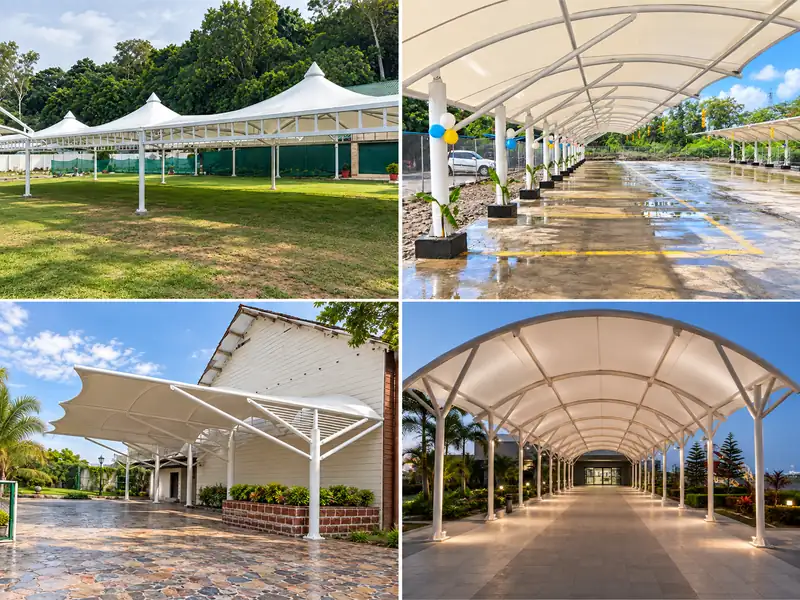
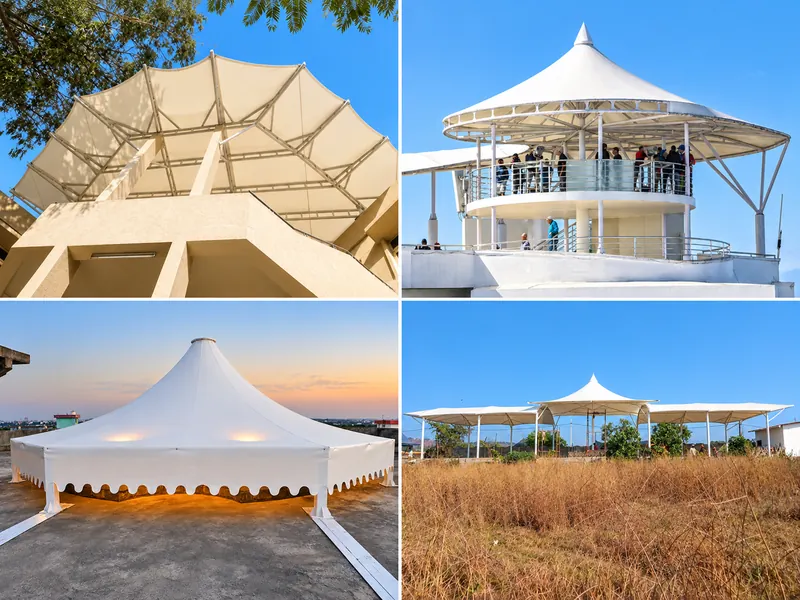
Our completed canopies over lawns, entrances, parking and terraces are shown below. They help when comparing forms and finishes for a civic space, while each plaza shade is designed for its own crowd flow. View more ShadeCo India projects.
Service Availability Across India
ShadeCo India provides public plaza shade structure solutions across major cities and regions in India. Civic projects can be delivered in Delhi, Gurugram, Faridabad, Noida, Lucknow, Chandigarh, Ludhiana, Jaipur, Jodhpur, Shimla, Dehradun, Haridwar, Bhopal, Indore, Gandhinagar, Ahmedabad, Patna, Muzaffarpur, Mumbai, Pune, Bengaluru, Hyderabad, Chennai and Kochi. Other cities are served based on project scope and site requirements.
Each plaza shade is planned around local sun angles, wind, rainfall and the plaza's event calendar. We phase the work so part of the plaza stays open to the public.
Planning a Public Plaza Shade Structure?
If you are planning shade for a city square, riverfront, station forecourt or mall plaza, ShadeCo India can advise on canopy forms, positions and fabric.
We request you to share the plaza plan, the areas to be shaded, how the space is used and site photographs. Please include the project location, and our team will propose a suitable shade layout.
Please call +91-9873975818, email info@shadecoindia.com, or use our contact page to share your details.
FAQ
Frequently Asked Questions - Public Plaza Shade Structure
A public plaza shade structure is a fabric canopy over an open civic space such as a city square, promenade or station forecourt. It shades seating and walking areas. Masts and columns are placed to keep crowds and emergency routes moving.
The cost depends on area, canopy form, fabric, finish and site work around utilities. PTFE is the costliest fabric and HDPE the most budget-friendly for plazas. ShadeCo India quotes from the plaza plan, photos and location.
PVDF-coated fabric is a good choice for civic canopies, as it stays clean and has a warranty of up to 10 years. PTFE suits long-life landmark projects. HDPE shade net fits plazas that only need daytime shade.
PVC, PVDF and PTFE canopies shelter people from rain, while HDPE covers only sun. Masts, cables and footings follow the site wind load as per IS 875 (Part 3). Tamper-resistant fixings suit open public use.
A public plaza frame in steel is expected to last 25–30 years with regular checks. PVDF fabric on plaza canopies is warranted for up to 10 years, subject to the manufacturer's terms.
Plaza canopies range from small seating islands to large landmark spans. The size is set by the plaza, crowd flow and access routes. Very large areas are often covered by several linked canopies.
A plaza project usually takes 3–6 weeks, depending on size and design. Work is phased so part of the plaza stays open.
No, if planned at the start. We mark fire tender and service routes and keep them free of supports with enough height above. Manholes and utilities also stay reachable.
