
By Akram Ansari, Founder, ShadeCo India · Published: · Updated:
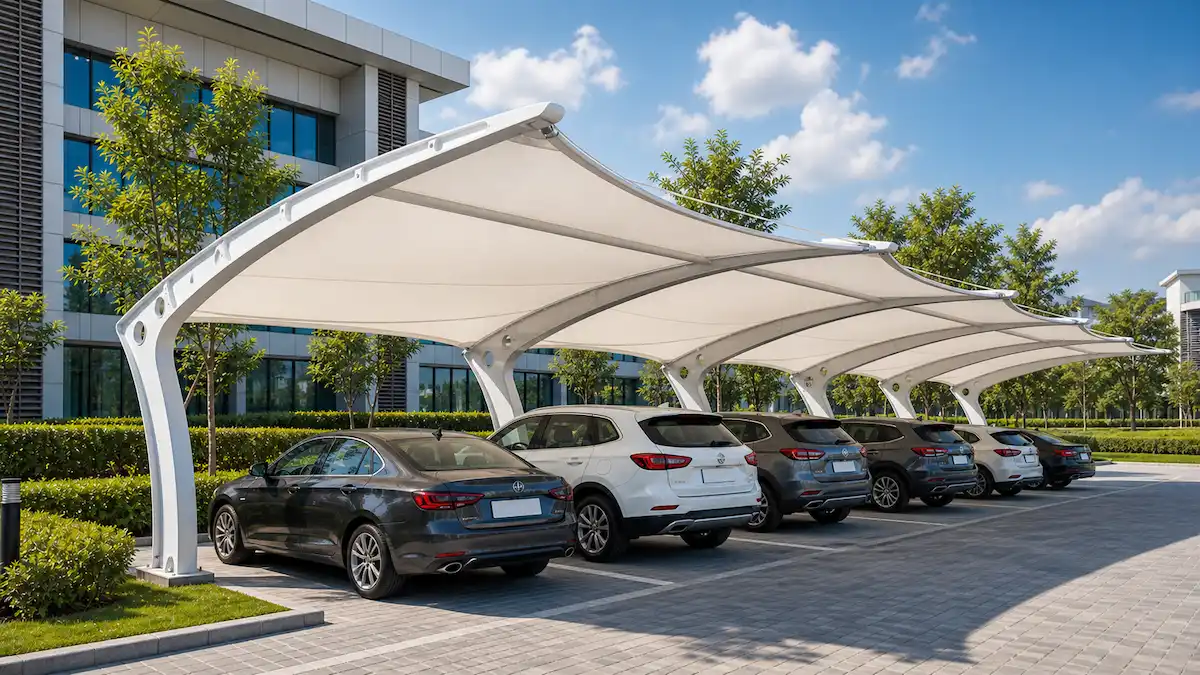
Car parking shade design means planning a roof that keeps parked cars out of sun, heat, rain and dust, while staying strong, safe and easy to use. People also call this structure a car parking shed, a carport, a car parking canopy or a vehicle shade structure. From outside it may look simple. But how well it works over the years depends on how carefully the design, materials and installation are planned before work starts.
The project may be a home, housing society, office, mall, school, hospital, hotel, factory or public car park. In each case, the right shade guards cars against strong sun, heat, rain and dust, and makes the whole property look better.
In Indian summers, a car left in open parking in the afternoon gets very hot inside. Its paint, dashboard and tyres also age faster under constant sun. A well-planned shade solves this daily problem. But it only works well when its height, column layout, drainage and wind design suit the way the car park is really used.
A successful car parking shade is designed around the site. Parking layout, vehicle clearance, column position, roof slope, fabric tension, steel strength and installation access must work together.
At ShadeCo India Private Limited, we design, make and install car parking shades for homes, offices, schools, hospitals, factories and other sites across India. Our own engineers, fabricators and installers handle every job, from the first site visit to the final tensioning. This guide explains the main design points, common materials, benefits and installation steps of a car parking shade.
What Is Car Parking Shade Design?
Car parking shade design is the planning of the frame, roof shape, supports, materials, height, bay spacing, drainage and footings for a covered car park. The goal is to protect cars without getting in the way of parking or wasting space.
A good design looks at the number of cars, the size of the site, how cars come in and go out, nearby buildings, the path of the sun, how rain flows and how strong the wind is. These details decide whether the site needs a cantilever shade, a double-sided shade, a tensile fabric shade, a polycarbonate shade or a modular parking shed.
Most of these choices are made in the first few drawings. Moving a column line or raising a roof after the steel is made costs far more than changing it on paper. So time spent on layout and design at the start is the cheapest part of the whole job.
Important Design Factors for Car Parking Shades
Design is the most important stage of a car parking shade project. If it is not planned well, the shade may block parking, hold water, be too low, give weak cover or be hard to maintain later.
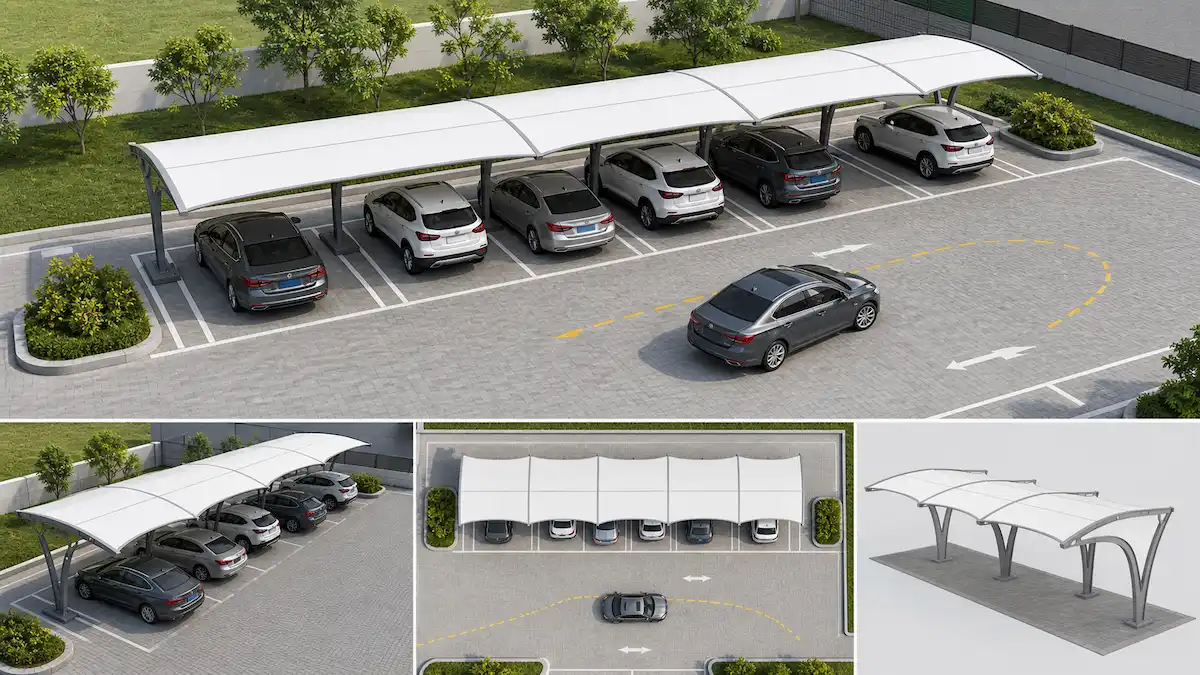
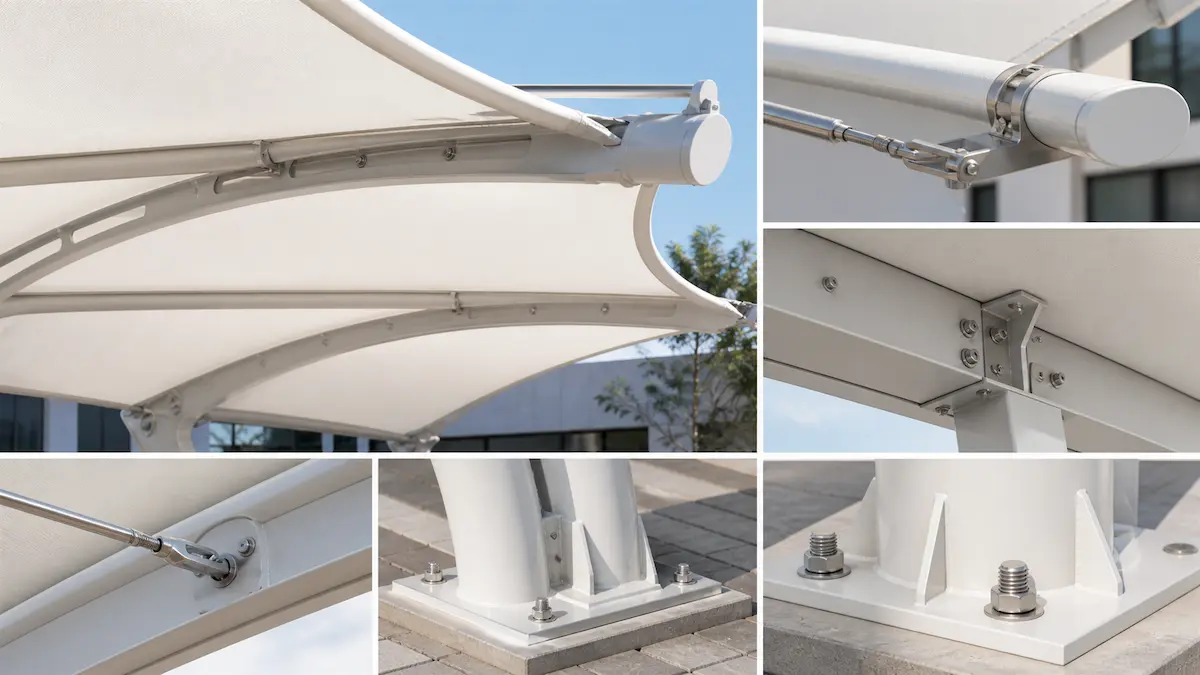
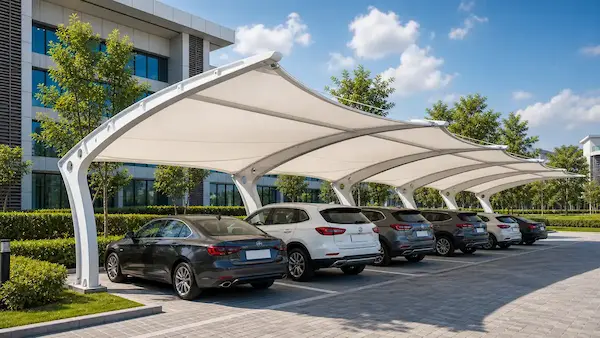
- Parking layout: The design should match single-row, double-row, angled or parallel parking. The bay grid sets the column spacing, so the shade is drawn over the marked bays, not the other way round.
- Vehicle height: The roof must be high enough for cars, SUVs, buses or trucks, based on who uses the site. The lowest edge of the fabric, not the top of the column, sets the real height. Allow for roof carriers and tall vans.
- Column position: Columns should not block doors, turns, walkways or gates. Putting them at the back of the bays, or between every two cars, keeps doors clear and cuts down on scrapes.
- Roof slope: The right slope lets rain drain away and stops water from pooling on the roof. Water should leave at the back of the bays or into a gutter, never over the driving lane or where people step out of the car.
- Wind load: Open car parks need a strong frame to resist wind push and lift. In India, wind load is worked out using IS 875 (Part 3). It often decides the size of the columns and footings more than the weight of the roof does.
- Shade cover: The roof should cover the cars well during the hottest hours. Because the sun moves through the day, the roof is often made a little bigger than the cars, most of all on the west side, where the afternoon sun is strongest.
- Access for upkeep: Plan how people will clean, check and repair the shade later. Leaving room for a ladder or lift beside the frame makes future care quicker and cheaper.
For large commercial sites, the plan may also include modular bays, walkways, lights, rain outlets and room to add more parking later. If EV chargers are planned, cable routes and charger spots are much easier to add at the design stage than after the shade is built.
Popular Types of Car Parking Shade Design
The right type depends on the site layout, budget, number of cars and the look you want. ShadeCo India offers many design options to suit each project, and many sites mix two or more types.
- Cantilever parking shade: Columns stand on one side only, so cars move in and out easily. It suits a row of cars parked against a wall, where the open front gives drivers a clear way in.
- Double-sided parking shade: Good for larger car parks, where cars park on both sides of a central column line. One line of columns covers two rows of cars, which saves steel and footings per car.
- Conical and pyramid shades: A conical car parking shade or a pyramid shape gives a bold look. It is often used at hotel, hospital or office entrances, where looks matter as much as cover.
- Tensile car parking shade: A tight fabric roof gives a modern, light look. The fabric spans between columns without purlins, so the space below feels open.
- Polycarbonate parking shade: Uses rigid sheets where a see-through roof is wanted. It lets in more daylight than fabric and suits homes and small offices that want a bright parking area.
- Modular parking shade: The same bay repeats along the car park. It suits societies, offices, schools, malls and factories, and new bays can be added as parking grows.
- Two-wheeler and large vehicle sheds: Bike and scooter sheds are lower, with columns closer together. Bus and truck sheds need much more height and wider spans.
Materials Used in Car Parking Shade Structures
The materials decide how long the shade lasts, how much care it needs, how it looks and what it costs. The roof, steel frame, coating and fittings should all suit the weather and how the site is used.
- PVC-coated fabric: The most common fabric for tensile parking shades. It is flexible, weather-proof and suits curved shapes. The usual range is 650 to 1350 GSM, and wider bays take the heavier grades.
- PVDF-coated fabric: PVC fabric that gets a PVDF coat on top. It resists UV better and lasts longer outdoors. The PVDF coat stops dust from sticking, and this grade carries a warranty of up to 10 years.
- PTFE fabric: A high-performance fabric for large tensile roofs. It costs more than PVC, so it is mostly used where a very long life and a clean white finish are needed.
- Polycarbonate sheet: A rigid roof that lets in daylight. It needs a minimum slope and good sealing at the edges and joints. See our polycarbonate roofing options.
- Mild steel frame: Used for columns, rafters, arches and supports, with paint, powder coating or galvanizing. The finish is picked for the site, with stronger cover near the sea or in factory air.
- Galvanized steel: Used where better rust protection is needed outdoors. Hot-dip galvanizing coats the steel with zinc inside and out, which protects hidden parts as well.
- Hardware and fittings: Base plates, anchor bolts, clamps, cables and brackets carry the load safely. Stainless or galvanized fittings are best, because a rusty clamp can stain the fabric and weaken the fixing.
For Indian weather, check UV cover, rain cover, rust protection, wind and cleaning needs before you fix the materials. Based on the grade, coated tensile fabric blocks as much as 98% of UV and works from −30°C to +70°C. That covers almost every climate in the country.
Tensile, Polycarbonate or Metal Sheet: Which Roof Suits Your Car Park?
These three roof types cover most car parking shades in India. Each has its place. Which one to pick depends on the look, light and budget the site needs.
| Factor | Tensile Fabric | Polycarbonate Sheet | Metal Sheet |
|---|---|---|---|
| Look | Curved and modern | Clean, flat or curved | Plain and practical |
| Daylight below | Soft, even light | Bright light | None |
| Heat below | Low with light-coloured fabric | Can feel warm in strong sun | Can heat up without insulation |
| Span between columns | Wide, with few supports | Needs closer purlins | Needs purlins and rafters |
| Rain noise | Quiet | Some noise | Loud in heavy rain |
| Best for | Offices, malls, hotels, societies | Homes and small offices | Factories and yards |
Many projects mix these options. For example, a site may use a tensile shade over visitor parking at the front and a sheet roof over staff or bike parking at the back.
Benefits of a Well-Designed Car Parking Shade
A well-designed car parking shade does more than give basic cover. It keeps cars safe, makes people more comfortable and gives the property a neater, more professional look.
- Car protection: Keeps sun, rain, dust, leaves and bird droppings off parked cars. Paint, rubber seals and dashboards fade and crack more slowly when kept out of direct sun.
- Cooler cabins: Stops the inside of the car from heating up and makes getting in more comfortable. The air conditioner also has less work to do when the car starts.
- Neater parking: Covered bays guide drivers into straight rows. This makes better use of the space you have.
- Higher property value: Adds a clean, professional feature to the property. For housing societies and offices, covered parking is often something buyers and tenants look for.
- Better looks: Tensile and modern shades improve the look of the car park. The canopy can match the colours of the building, so the parking area looks planned, not added later.
- Long life: Good materials and installation mean fewer repairs. With a galvanized or powder-coated finish, the steel frame is designed for a structural life of 25 to 30 years.
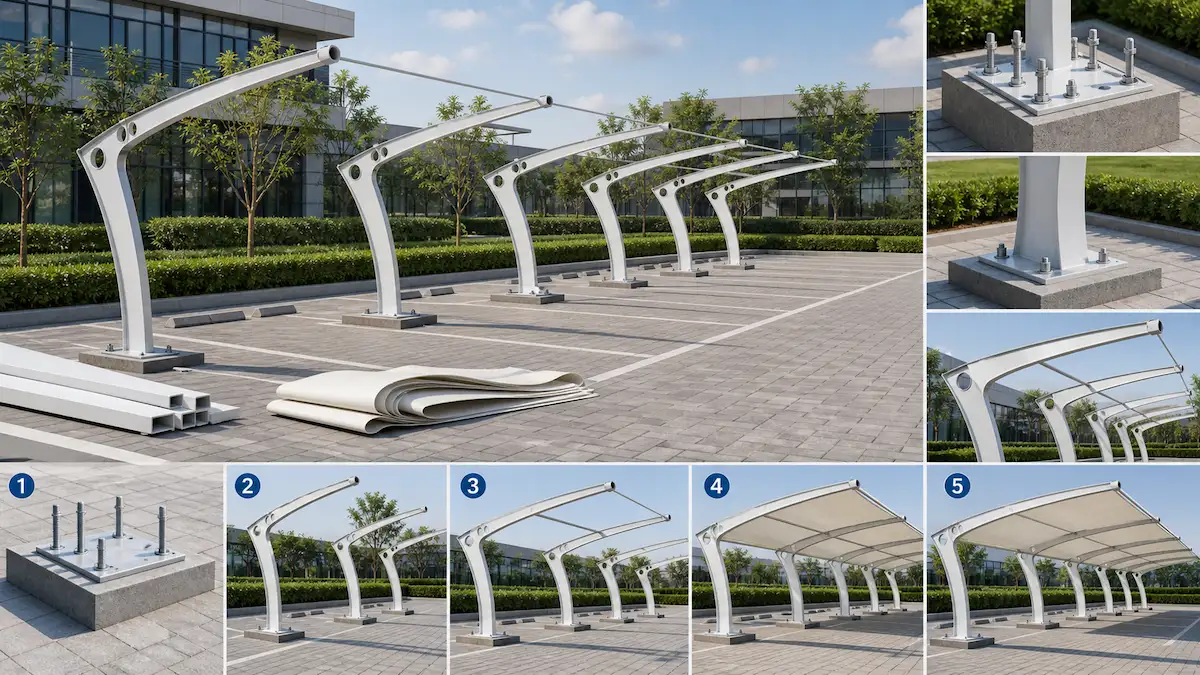
Installation Process of Car Parking Shade
A car parking shade should be installed in a set order, so it is safe, straight and ready for long use. The exact steps depend on the site size, design and materials.
- Site check: The team takes measurements and checks the layout, ground, access and drain points. Underground cables, pipes and drains are marked, so the footings do not hit them.
- Final design: The type, cover, height, column positions and materials are approved. These drawings then guide every later step, from footings to fabric.
- Foundations: Concrete footings, anchor bolts and base plates are set as per the structural design. The concrete is left to gain strength, and the bolts are checked for level and position before the steel arrives.
- Steel fabrication: Columns, supports, arches, rafters and brackets are made and finished. This is done in the workshop while the footings are being built, which saves time on site.
- Frame erection: The steel parts are put up, lined up and fixed on site. Heavy members are lifted with a crane or hydra, and the work is planned so parking can go on in other parts of the site.
- Roof fixing: The fabric or roof sheets are fitted and tightened. Fabric is pulled tight a little at a time from all corners, while sheets are fixed with the right overlaps and sealed joints.
- Final check: Drainage, bolts, alignment, finish and shade cover are checked before handover. Where possible, water is run off the roof to make sure it falls where the design planned.
Good installation avoids loose fittings, poor alignment, pooled water, fabric wrinkles and early wear. Installers wear full-body harnesses and PPE when working at height, and fabric lifting stops in strong wind. See our installation services for more detail.
Maintenance After Installation
A car parking shade needs regular care to keep its look and work well. Upkeep is usually simple when the shade is designed and installed correctly.
- Cleaning: Clean the roof or fabric from time to time with a soft brush, mild soap and low-pressure water. Do not use solvents, bleach or high-pressure jets, as they can damage the coating.
- Drain checks: Check the rain drains before the monsoon. Leaves and dust in gutters are the most common reason water spills onto parked cars.
- Fitting checks: Check bolts, anchors, clamps and fittings after strong wind or heavy rain. Tighten anything that has come loose, and look for sagging fabric.
- Steel care: Check the steel coating and treat rust early. Small rust spots are easy to touch up but spread fast if left alone.
- No extra loads: Do not add extra weight, signs or electrical items without approval. Every added item changes the load the frame was designed for.
For larger car parks, a planned cleaning and maintenance visit once or twice a year keeps the shade clean and catches small problems early.
Why Choose ShadeCo India?
ShadeCo India offers complete car parking shade solutions, from design and material choice to fabrication and installation. We work with homes, offices, schools, factories and other clients to build shades that are practical, long-lasting and suit the site.
- Custom design: Every shade is planned for the site layout and how cars move, often with a 3D view before approval.
- Built for wind: Our in-house engineers design frames and footings using IS 875 (Part 3) and the related IS codes.
- Own workshop: Fabric and steel are made in our own workshop, under an ISO 9001:2015 quality system.
- Many uses: We build shades for homes, societies, offices, malls, schools, hospitals, hotels and factories.
- Full support: ShadeCo India supports clients from the first idea to final installation and later upkeep.
Frequently Asked Questions
Common questions about car parking shade design, height, materials, rain, wind, price and upkeep.
The best design for a car parking shade depends on how the bays are laid out and how much open space drivers need. A cantilever shade suits a single row of cars against a wall, because its columns stay at the back. A double-sided shade suits two rows facing each other, which share one column line. For entrances and visitor parking, conical or tensile shapes add a bolder look.
The lowest edge of the shade should clear the tallest vehicle that will park under it, with a safe gap above. Cars, SUVs with roof carriers, delivery vans and buses all need different heights. So the height is set by the largest vehicle you expect. Remember that the fabric edge, not the top of the column, sets the real clear height.
For most tensile parking shades, PVC-coated polyester fabric with a PVDF top coat is the best fit. It keeps out rain, is light and stays cleaner in dusty places. Polycarbonate sheet suits homes and small offices that want a brighter parking area. Metal sheet suits factories and yards where looks matter less. The steel frame below is usually galvanized or powder-coated to stop rust.
Yes, rain stays off the cars when the tensile parking shade uses a coated fabric such as PVC or PVDF-coated polyester. The roof also needs enough slope and planned drain points. Then rain runs off quickly and lands behind the cars, not on the driving lane. HDPE shade net is different. It blocks sun but lets rain through, so it is not used where full rain cover is needed.
A parking shade is designed for wind by first working out the wind load for its site using IS 875 (Part 3). Car parks have no walls, so wind can push and lift the light roof from any side. The columns, cables, anchor bolts and footings are then sized to hold the roof down. The fabric is also kept at the right tension, so it does not flap in strong gusts.
The price of a parking shade project is set mainly by the number of bays, the height, the roof material, the amount of steel and its finish, and the footing work. Cantilever designs need heavier columns and footings than double-sided ones of the same size. Site access, location and any special shape also change the price. A clear quote needs measurements taken on site.
Simple, regular care keeps a parking shade in good shape. Clean the fabric or sheets with a soft brush, mild soap and low-pressure water, and never use solvents or high-pressure jets. Clear gutters and drain points before the monsoon. Check bolts and clamps after storms, and touch up any rust spots on the steel early. A yearly check helps catch loose fittings or sagging fabric in good time.
Yes, old parking shade fabric can usually be replaced without building a new frame. The steel frame lasts much longer than the fabric, so when the fabric ages, a new membrane is made to fit the same frame. The team first checks the steel, cables and fittings. If the old drawings are lost, the frame points are measured on site to make a new cutting pattern.
Is a Car Parking Shade Worth It?
Yes, for most homes and businesses, a car parking shade is worth it. It keeps cars cooler and cleaner, makes the parking area safer and neater, and with the right design and materials it keeps working well outdoors for many years.
Planning covered parking for a home, housing society, office, mall, school, hospital, hotel, factory or business site? Contact ShadeCo India for design advice, a quotation and full project support. You can also read our guide to car parking shades for residential and commercial spaces.